I design the space
between people
and technology
Projects
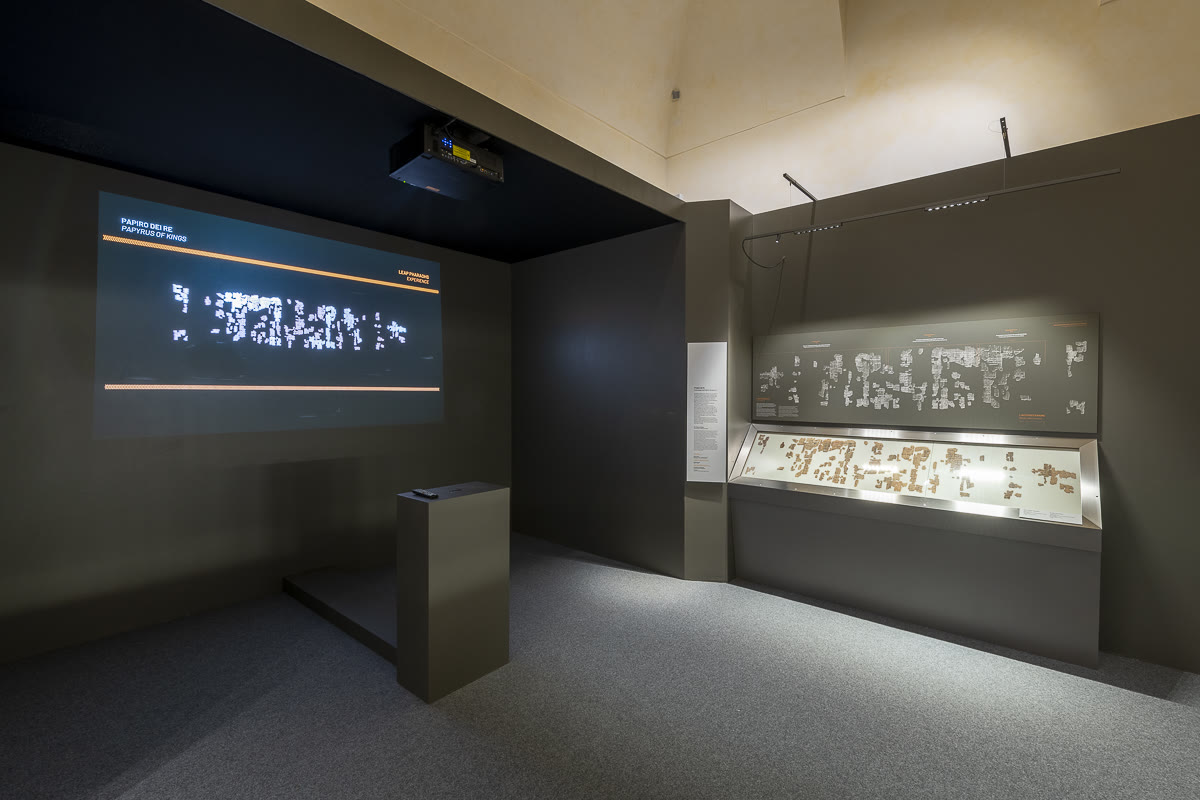
Touchless interactive application for the Egyptian Museum of Turin. Visitors explore a XIII century BC papyrus through hand movements alone. In permanent exhibition.
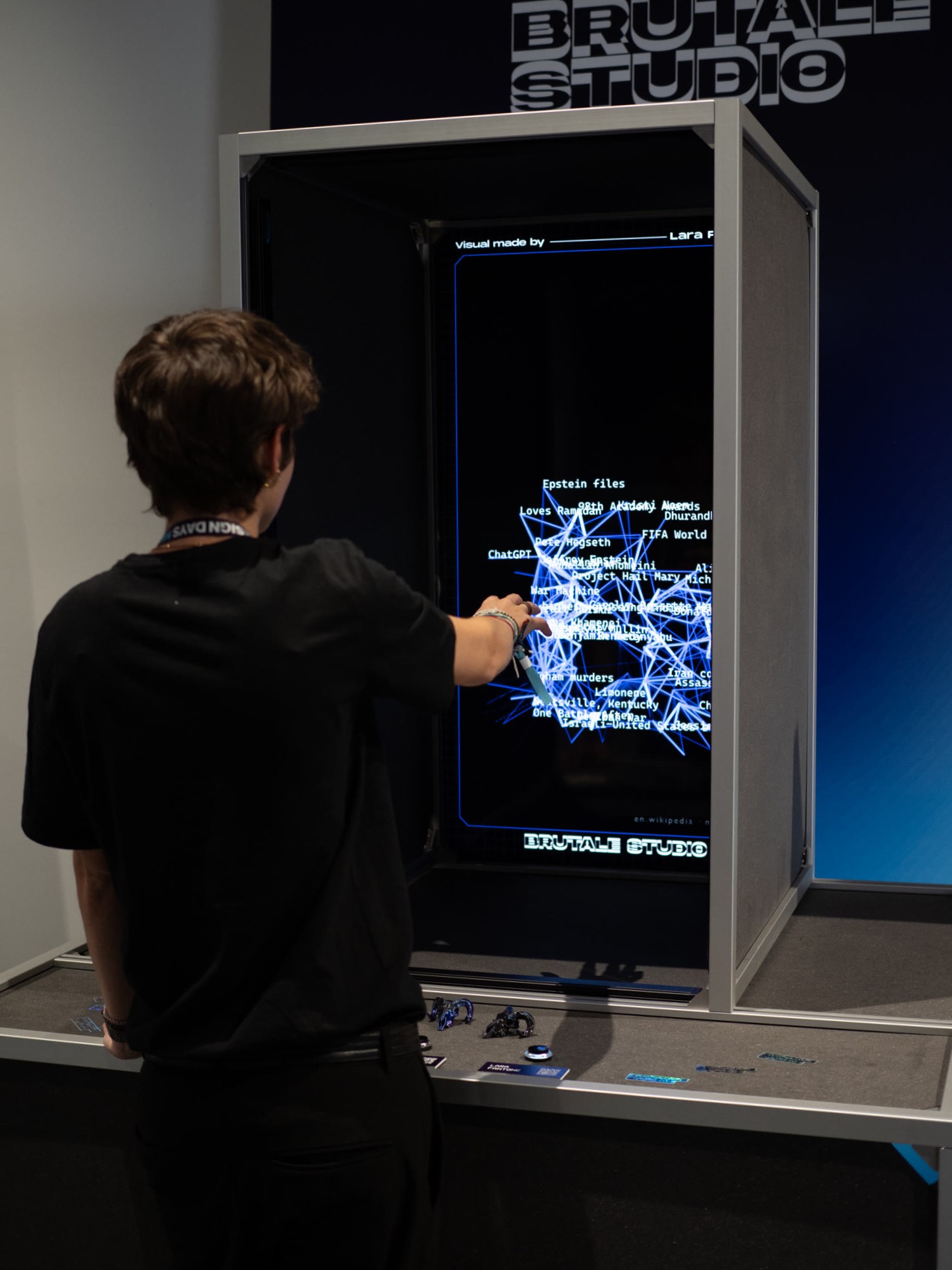
Real-time Wikipedia data forms a living word network. Are you moving the system, or is it moving you?
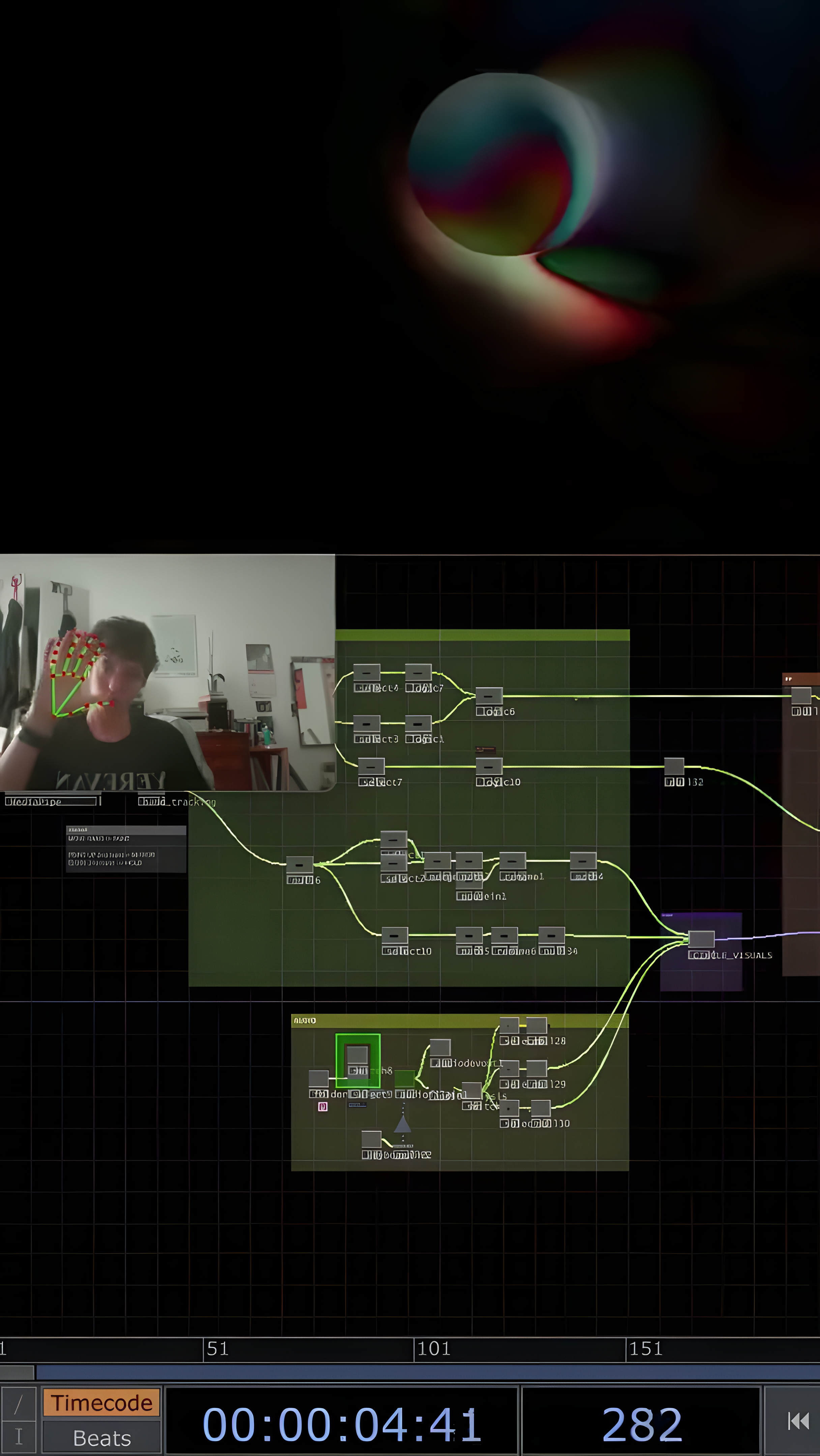
Hand gestures captured via webcam trigger generative visual effects — turning the user into a live performer.
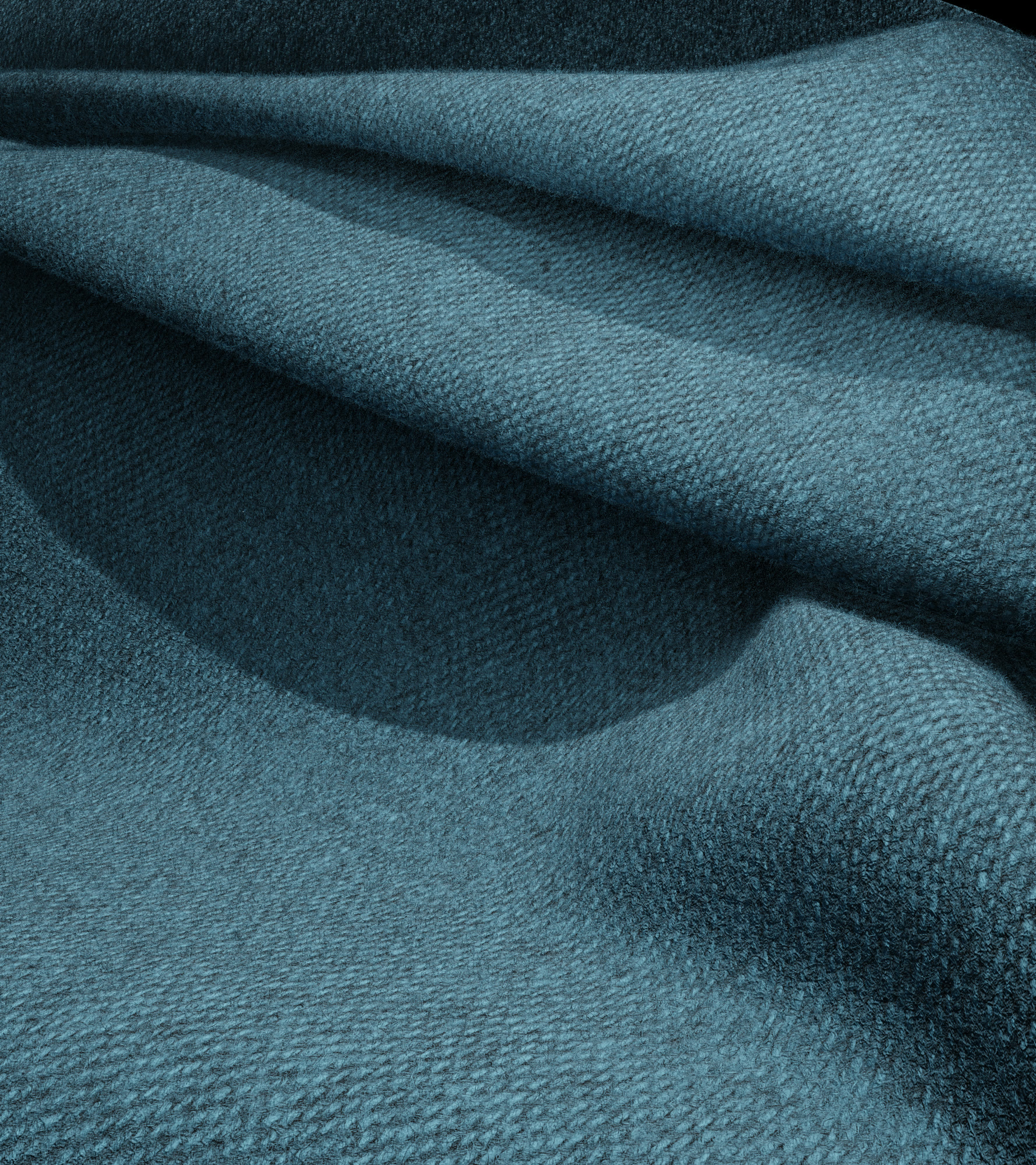
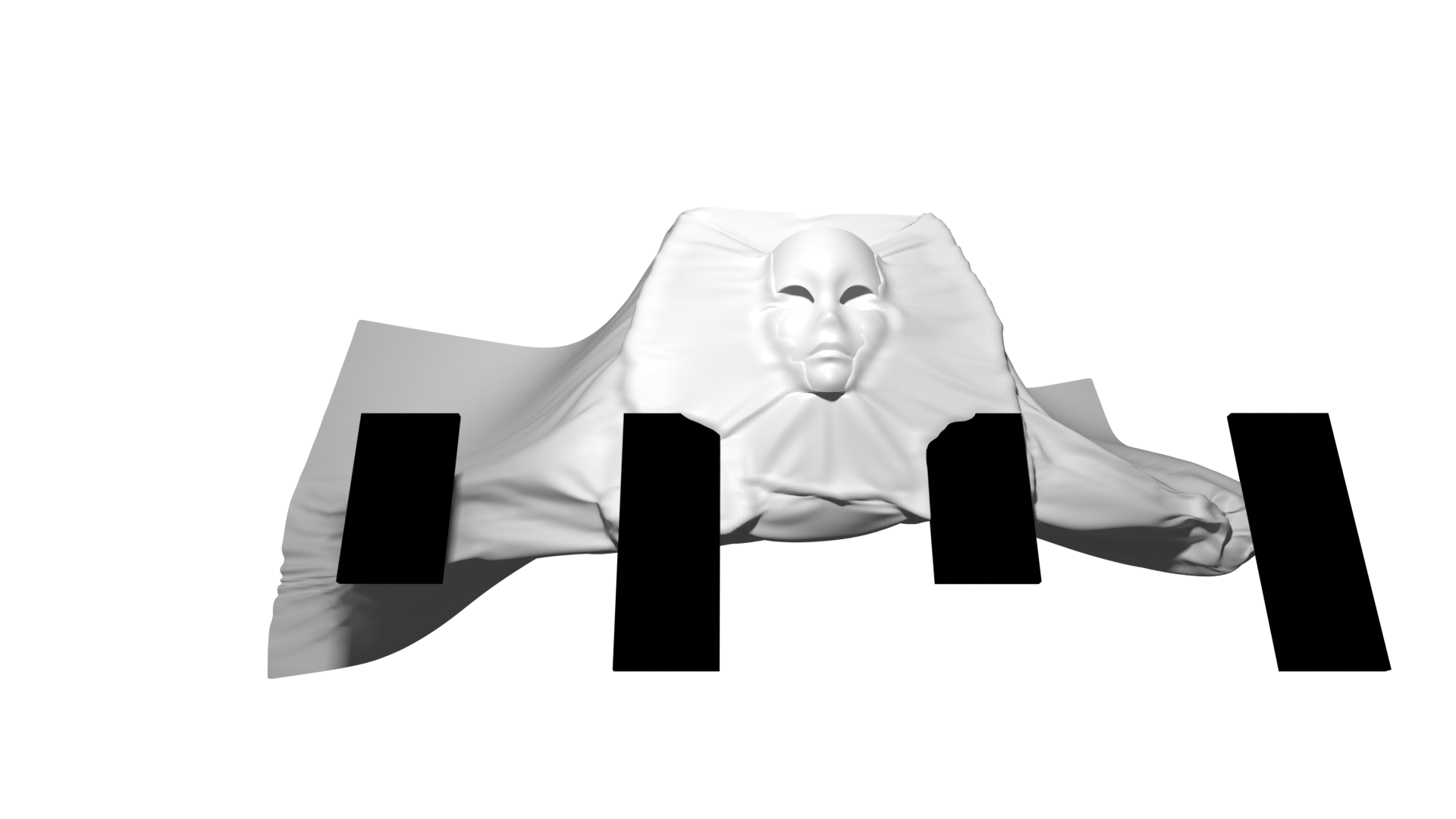
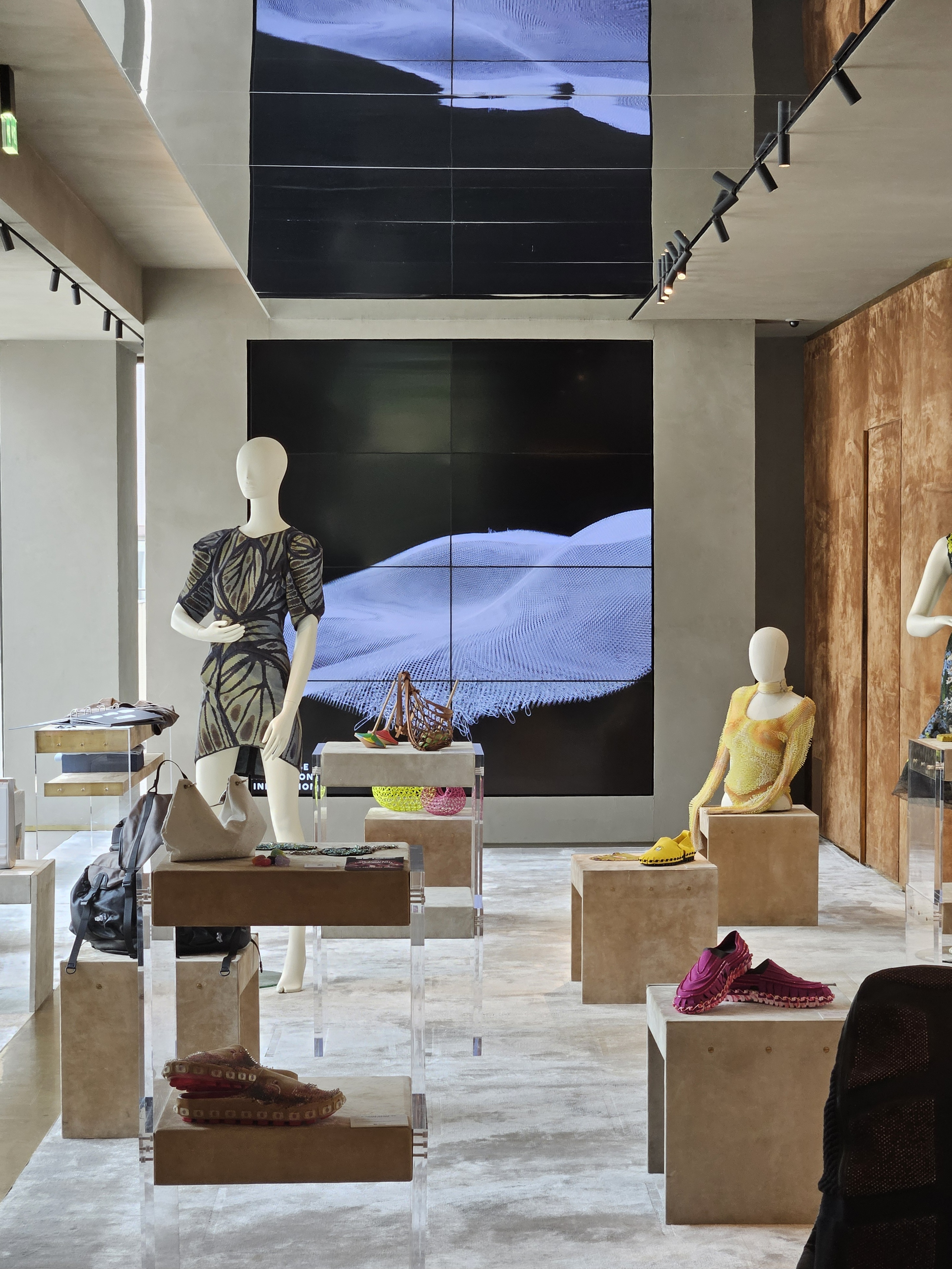
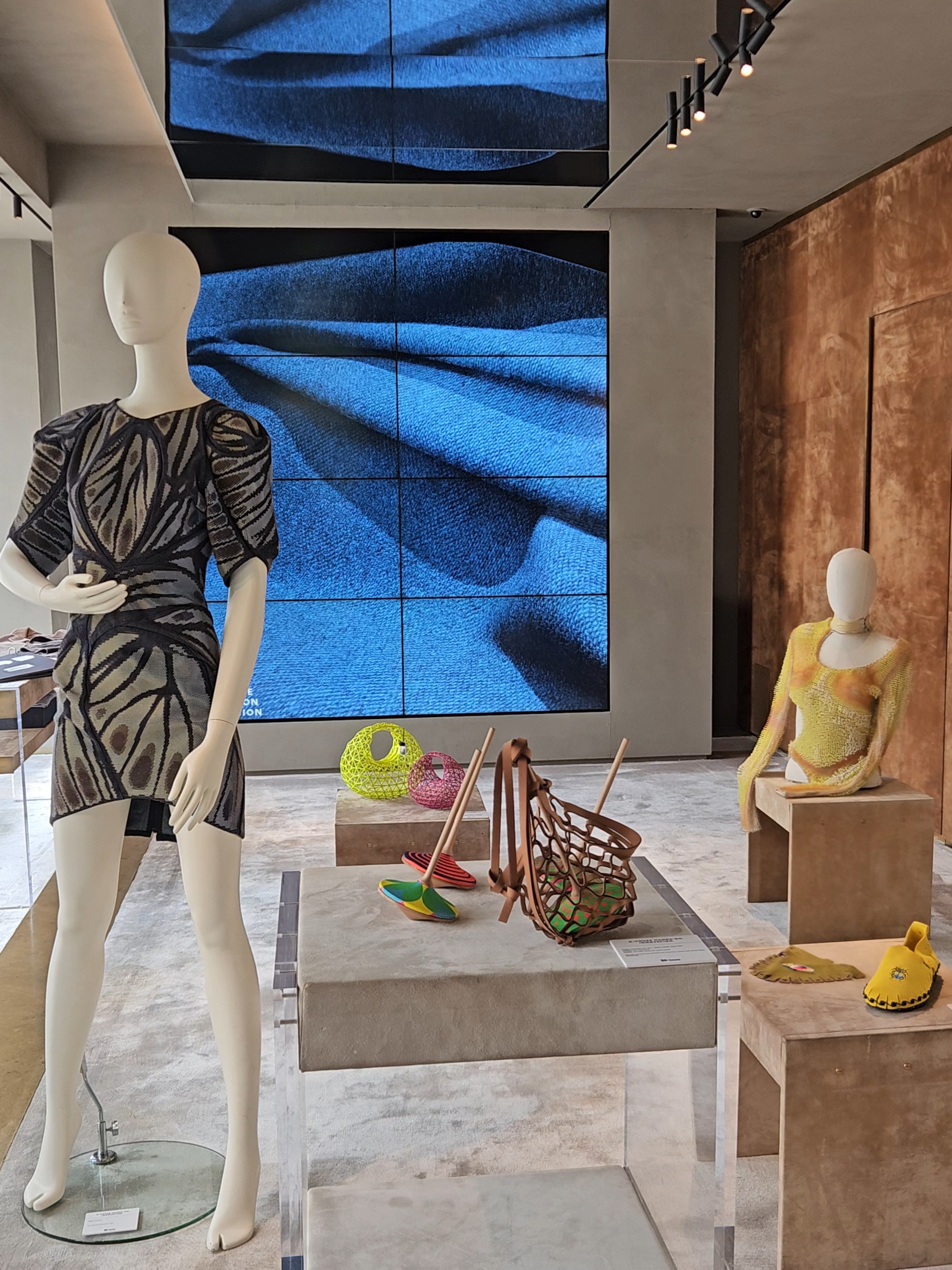
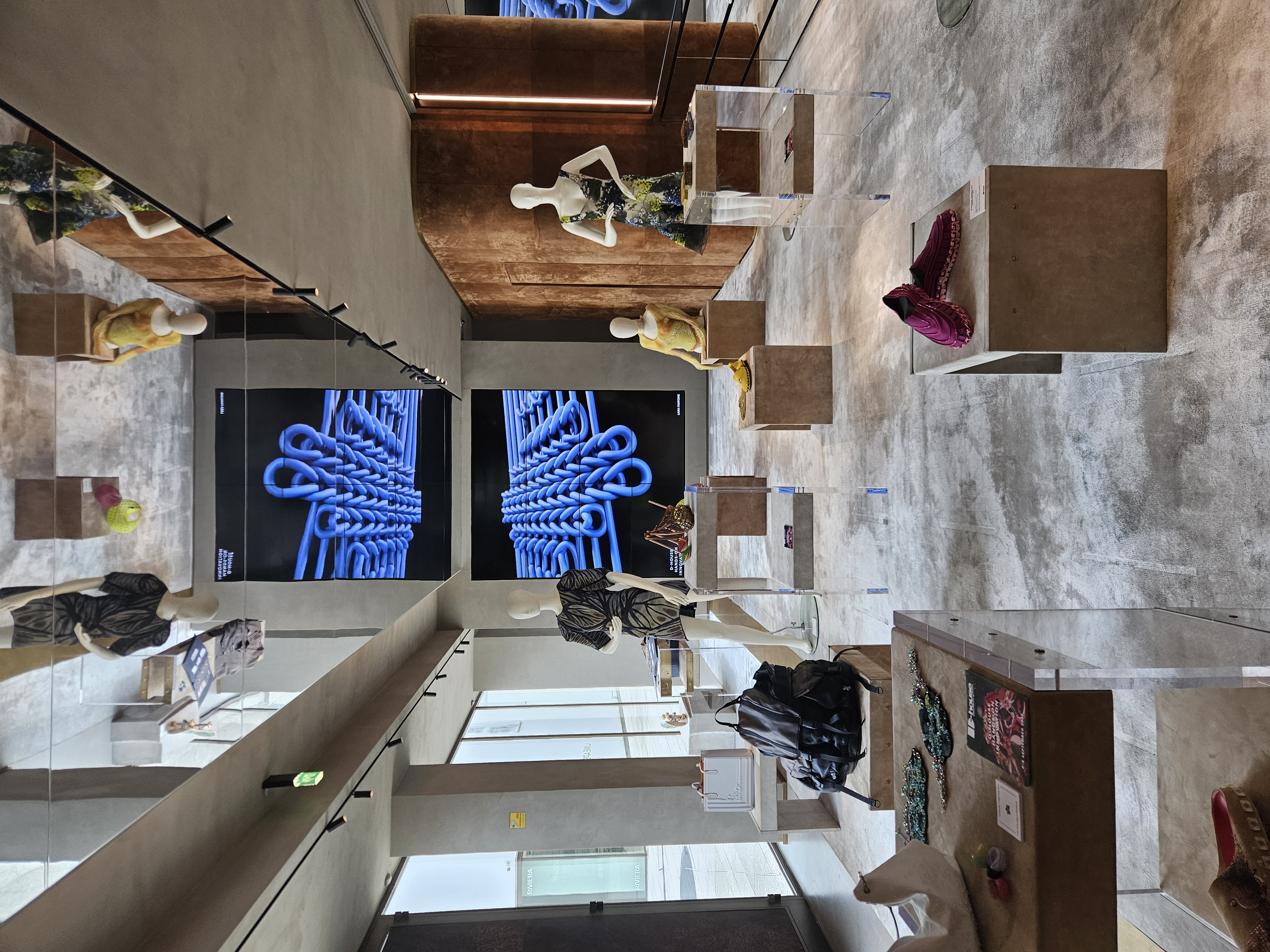
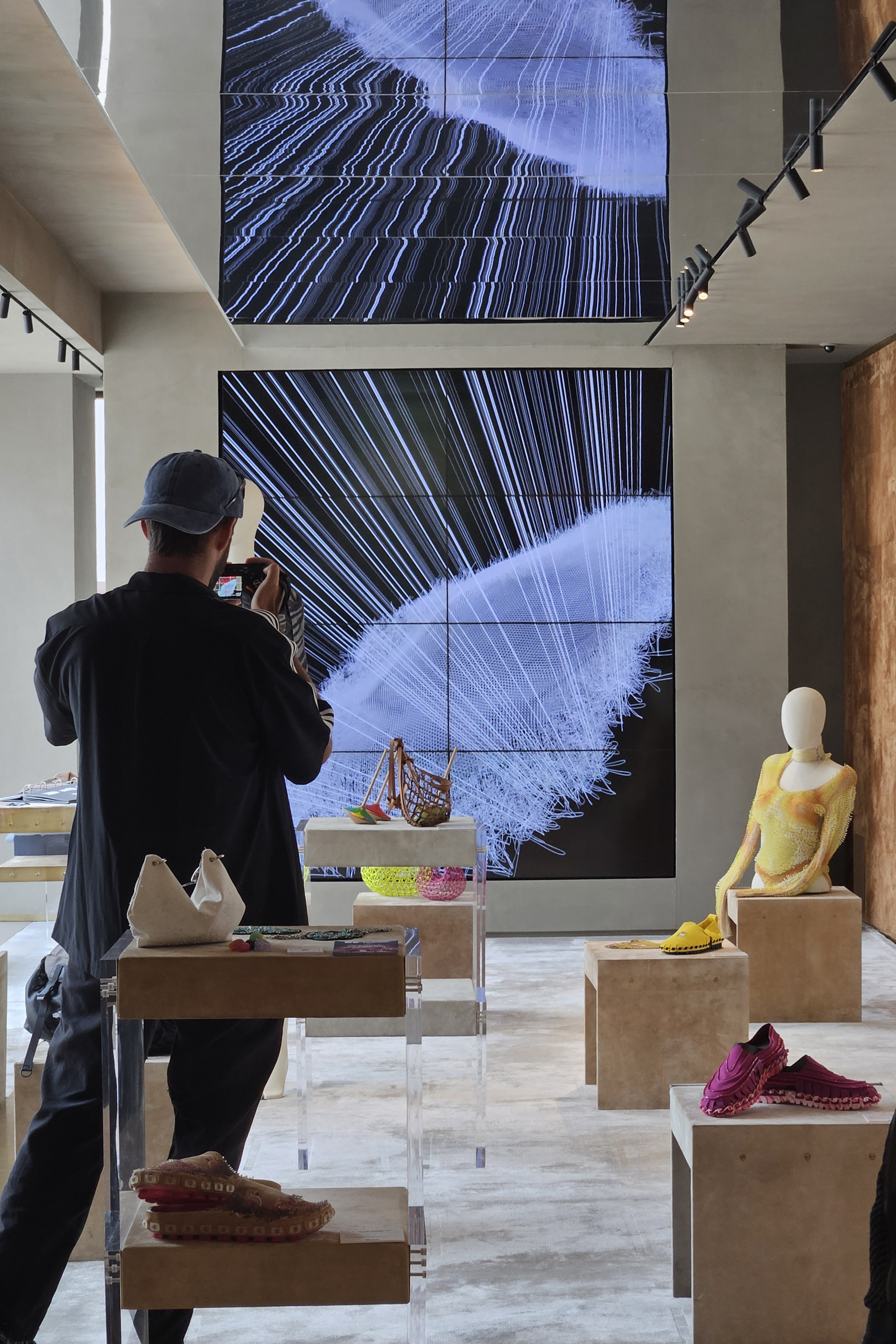
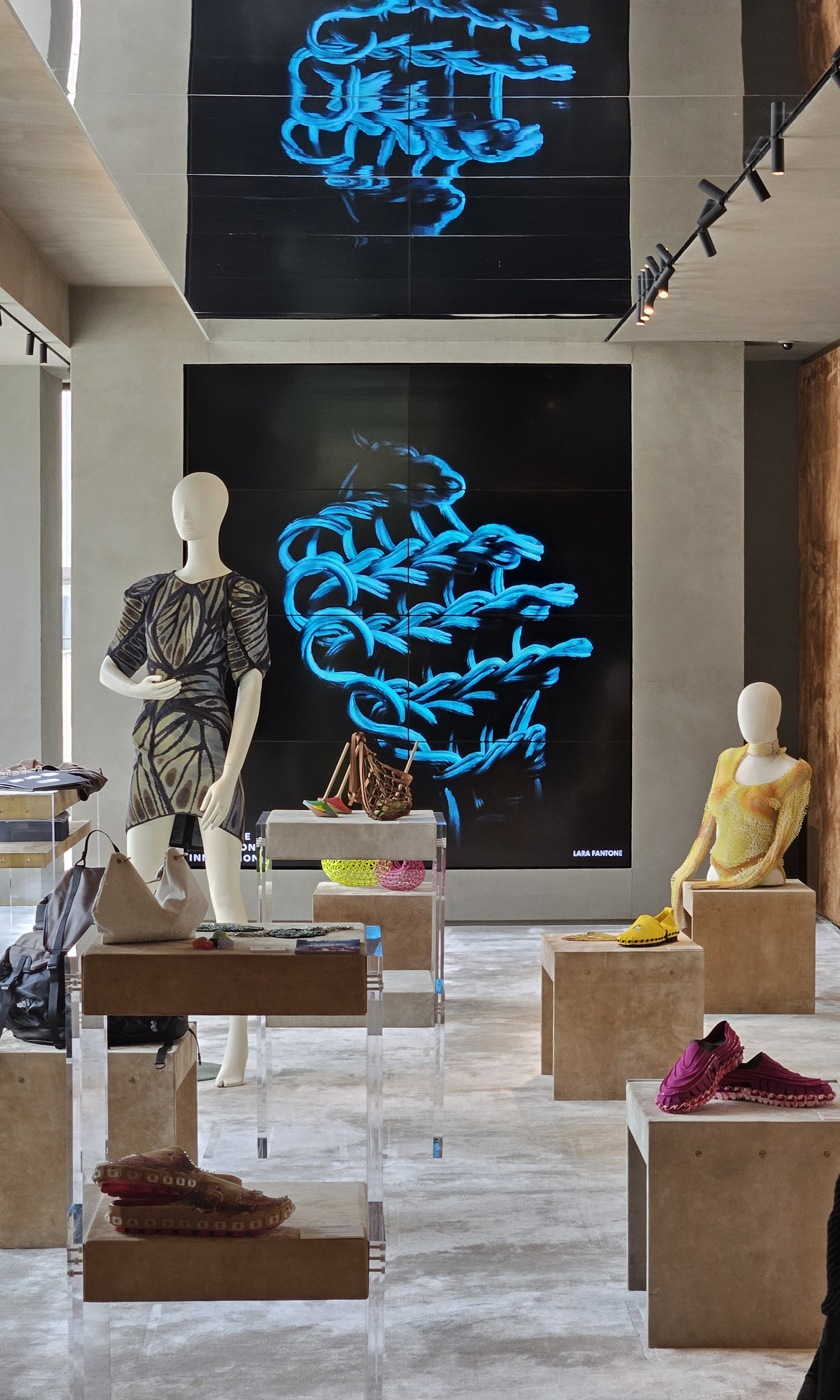
Commissioned 3D visuals in cotton, synthetic and leather for Spazio Linea Pelle — five years of material research at DHouse.
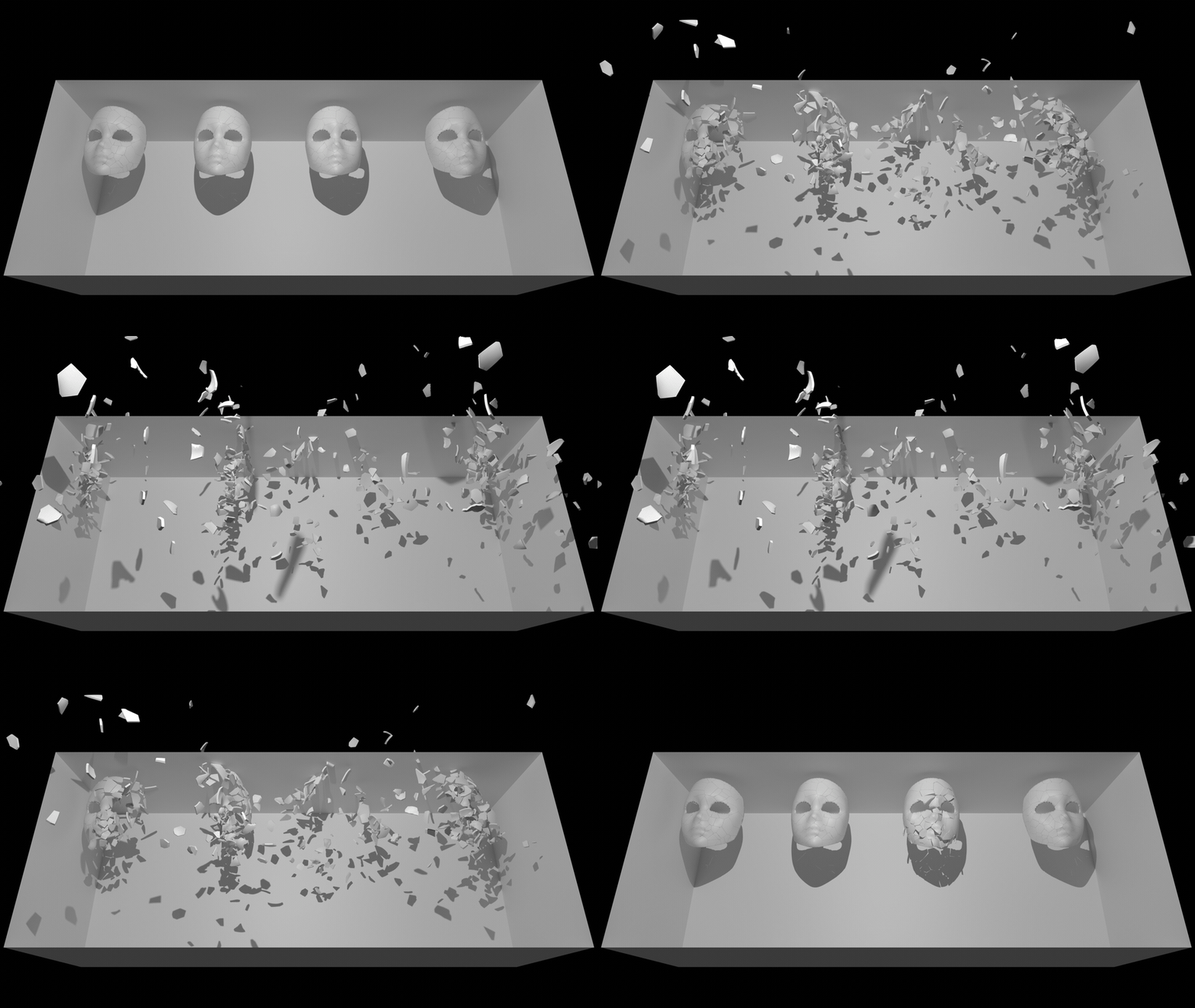
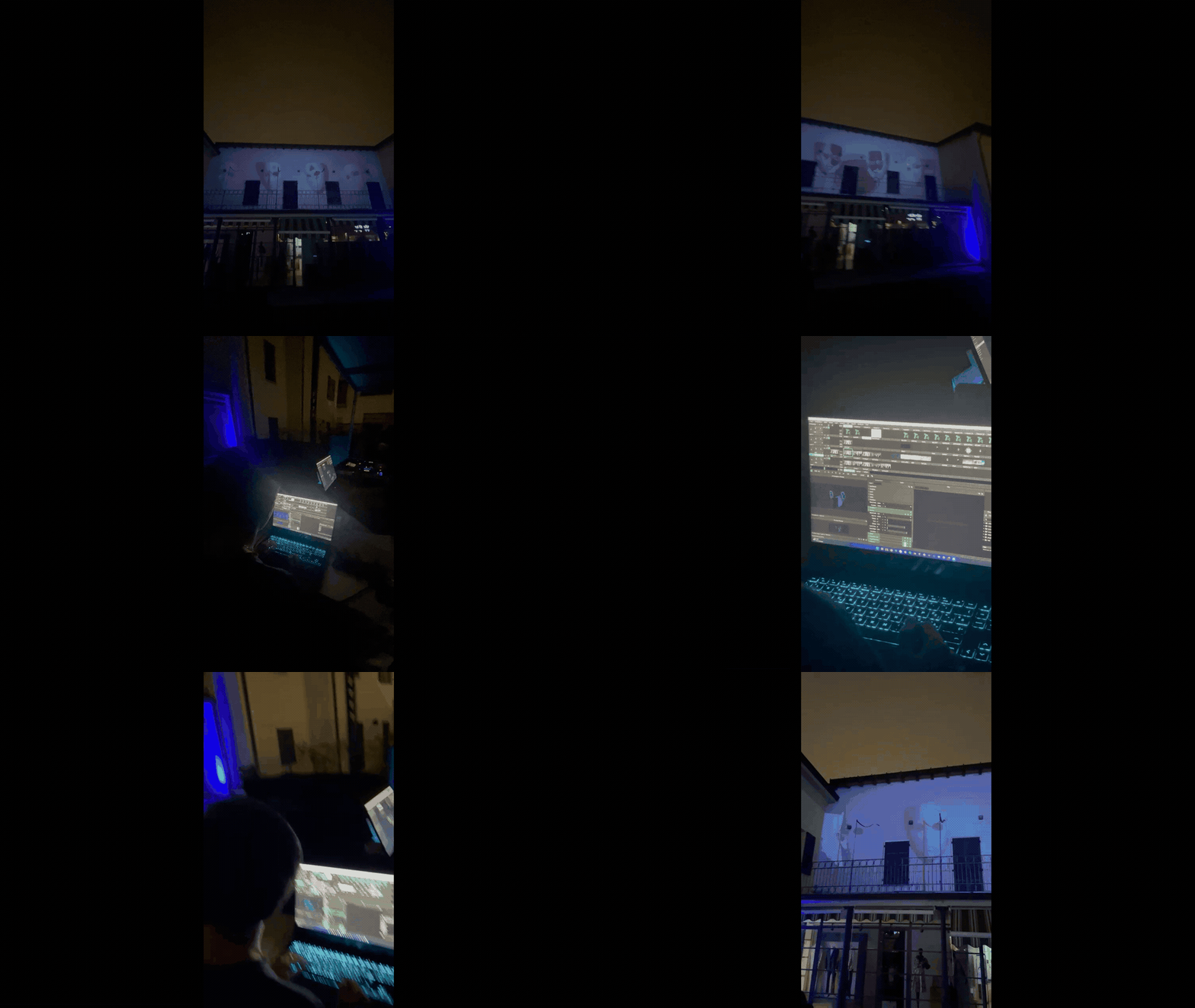
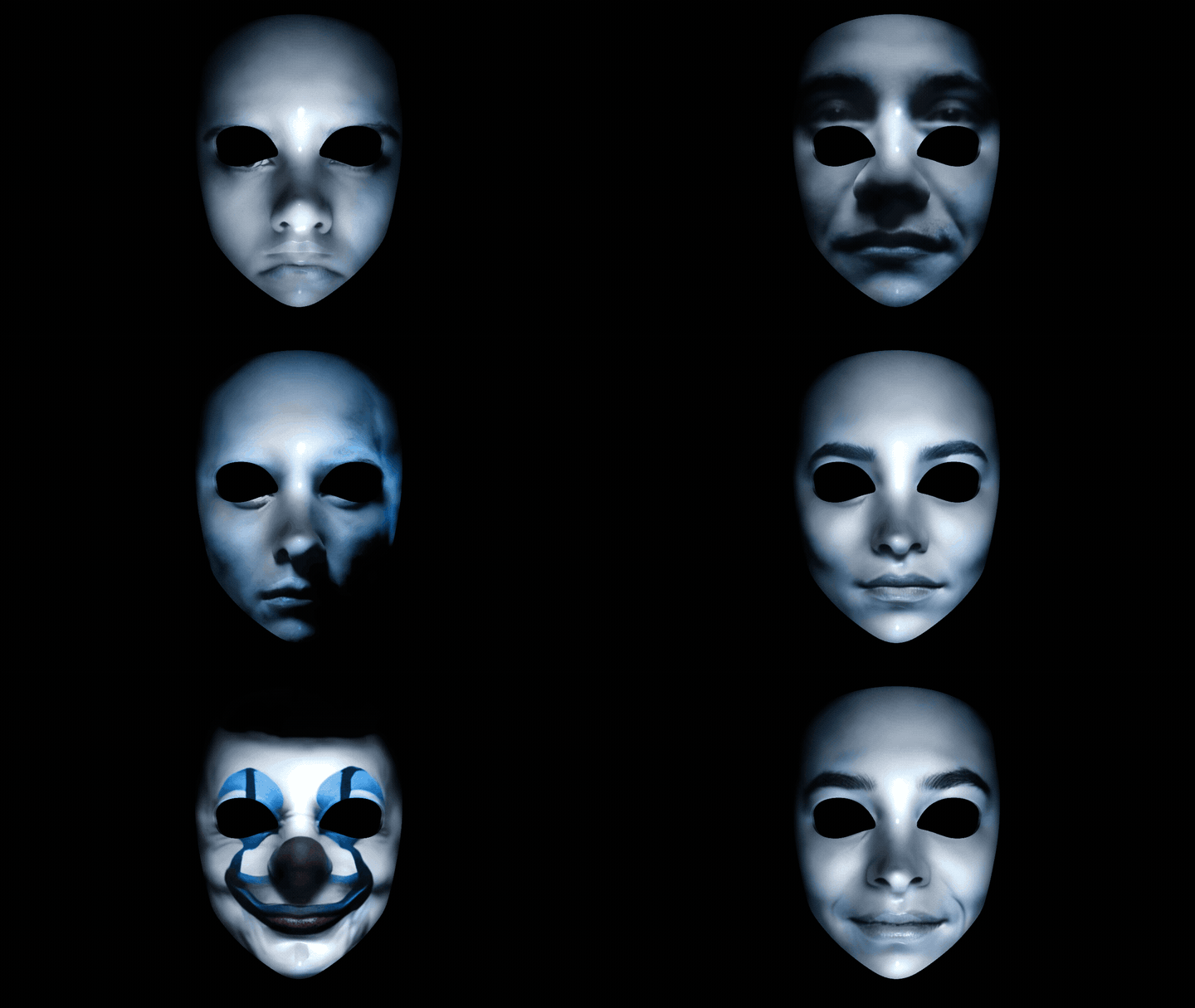
Generative videomapping for a live VJ set at DHouse Academy, Milan. 3D visuals and AI-generated masks projected and mixed in real time.

Front-end development of a refined showcase website for a British luxury wool and cashmere brand, built from Figma designs by Nicoletta Annibali. English classicism meets Italian craftsmanship.
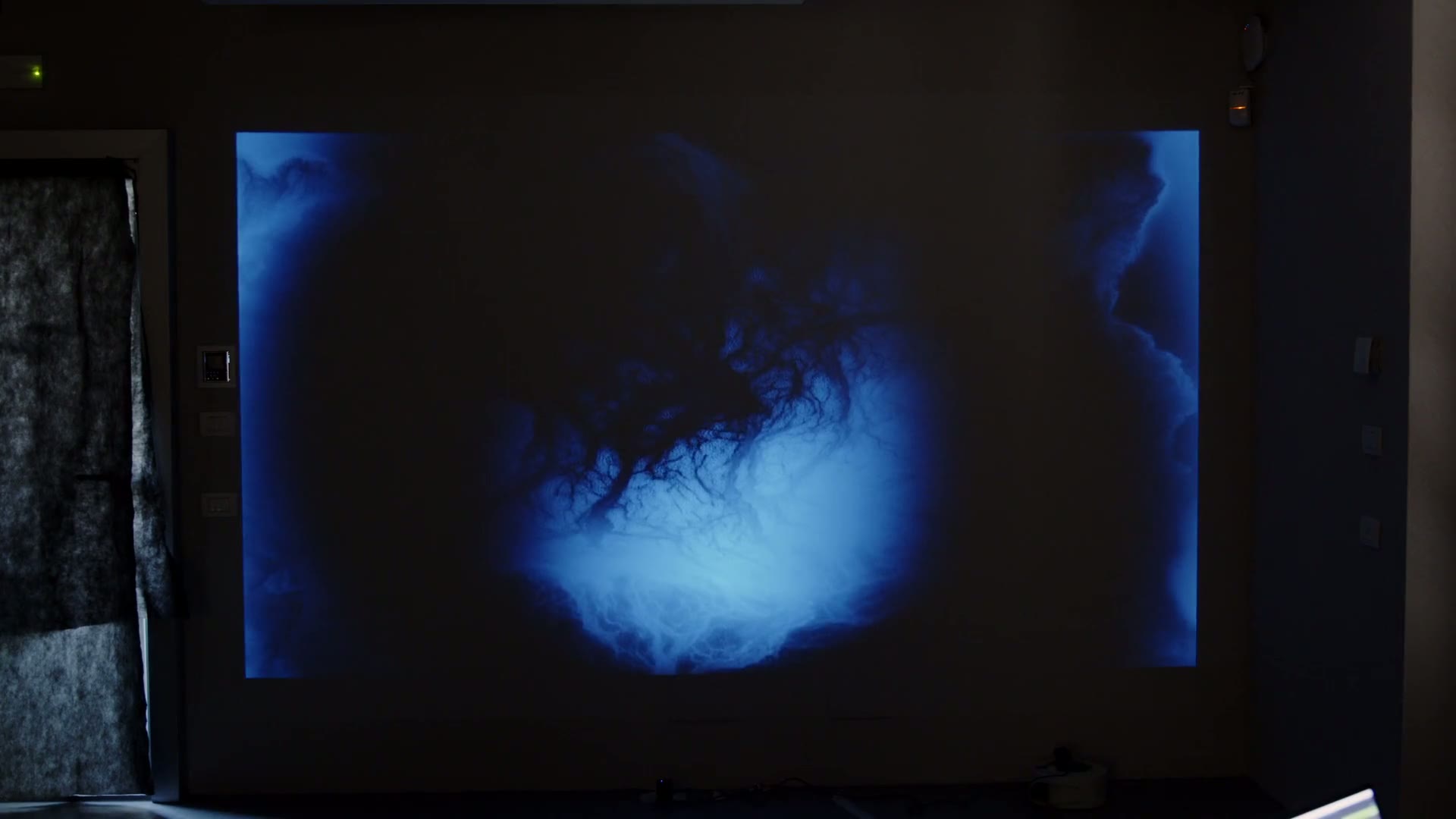
Touch and the network fractures. A meditation on the impermanence of individual action inside complex systems.
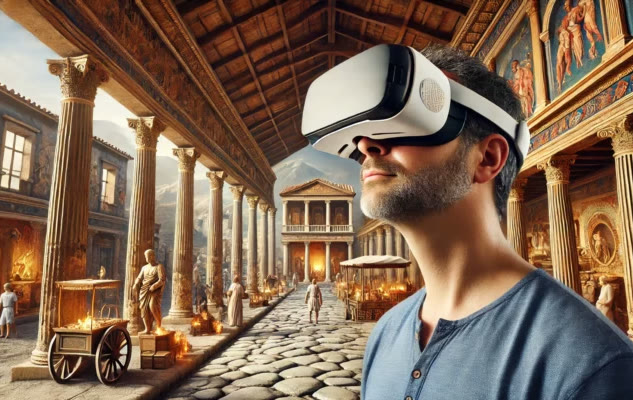
Unity3D VR game set inside a historically accurate reconstruction of ancient Pompeii. Treasure hunt mechanics, object discovery system, and backend quiz analytics.
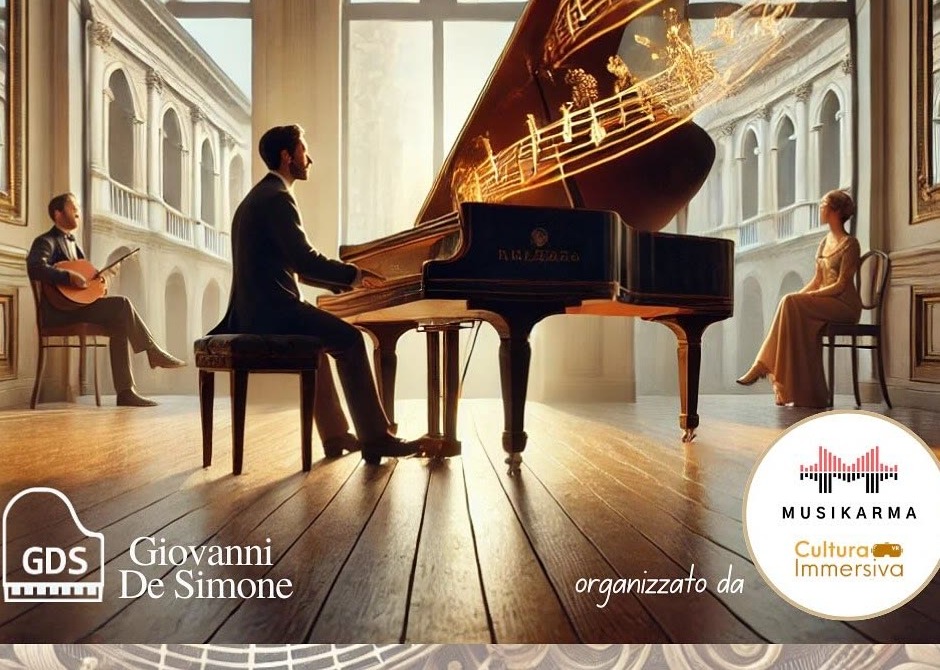
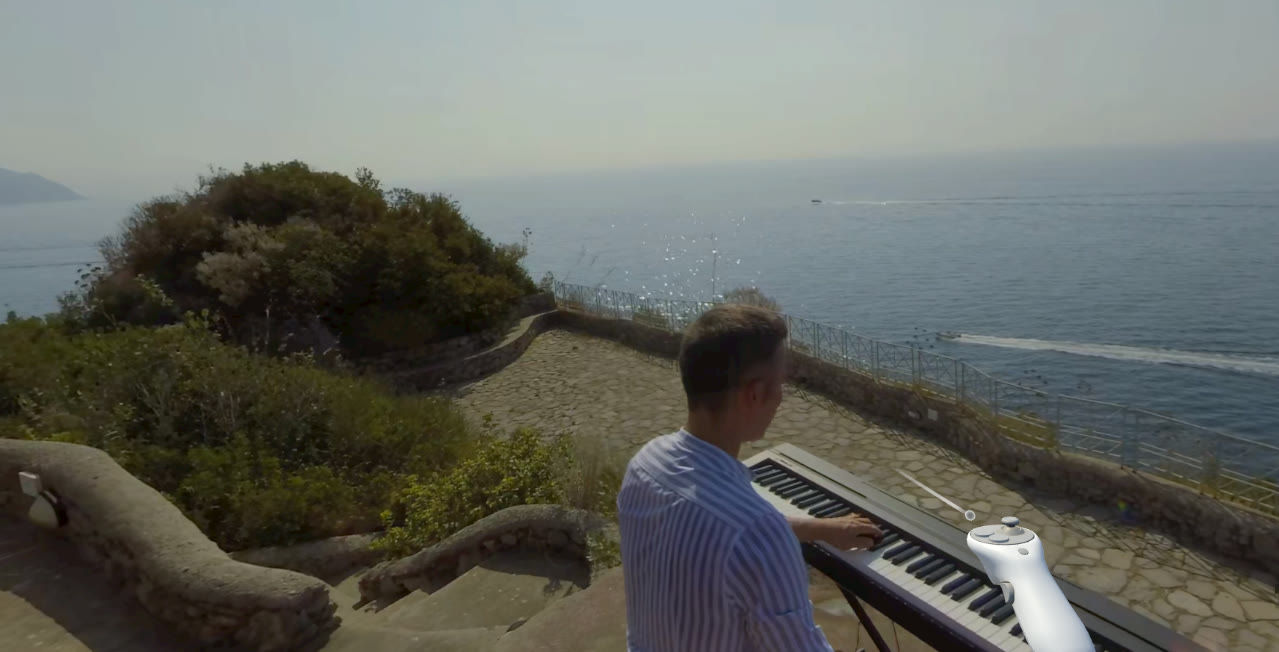
Unity3D VR app for Musikarma. An interactive gallery where paintings are portals — select one to teleport into an 8K 360° live performance on the Amalfi Coast.
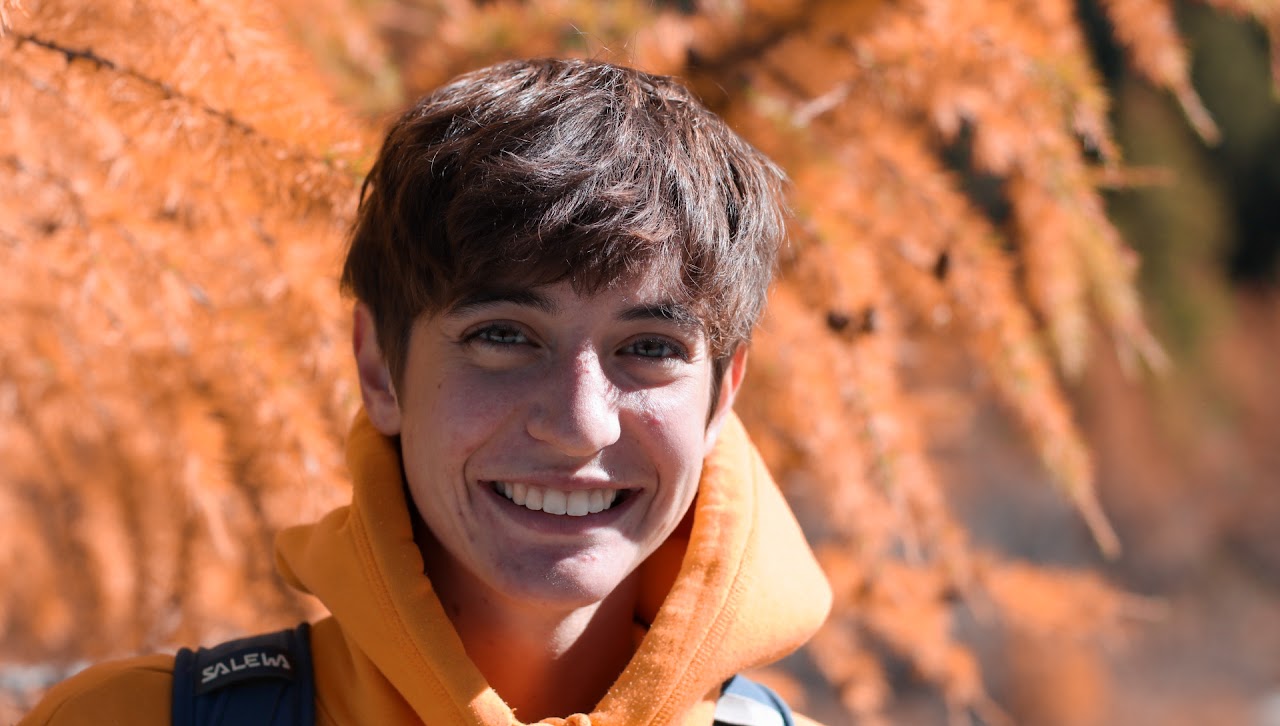
Lara Fantone
I studied Cinema and Media Engineering at Politecnico di Torino — a programme unique in Italy, bridging engineering and the cultural industries: programming, computer graphics, 3D, sound design. My thesis became a permanent installation at the Egyptian Museum of Turin.
After graduating I worked as an Android developer — which taught me a lot about shipping real software. But I kept being pulled toward a different kind of product. I started collaborating with Drimlab, a cooperative that builds applied games for social innovation, and found my direction: interactive experiences where the mechanics themselves carry meaning.
In parallel I followed the Master in Creative Visual & Digital Art in Milan — deepening my practice in videomapping, generative animation, and above all TouchDesigner, which has become a central tool in how I think about real-time interactive work.
I believe technology should leave people feeling something — curious, surprised, more present. That's the thread connecting everything I make.
Let's
work
together.
Papiro
dei Re
Exploring the Book of Kings without touching a thing
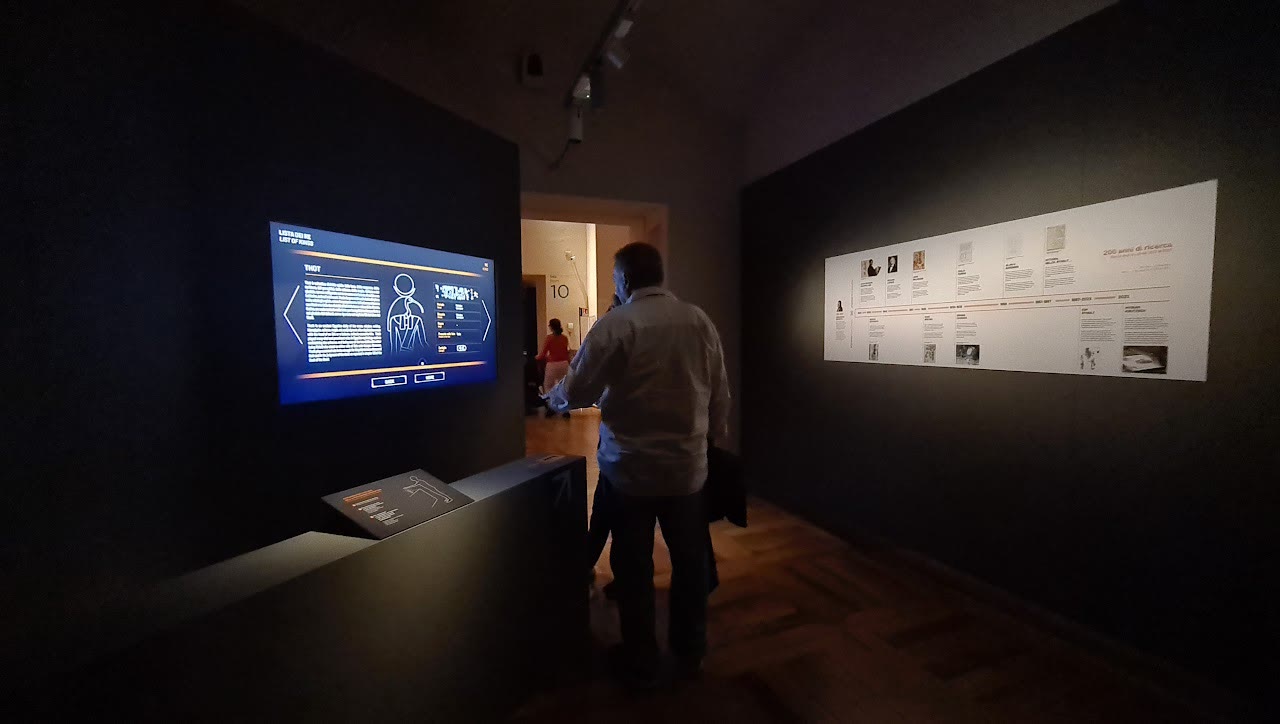
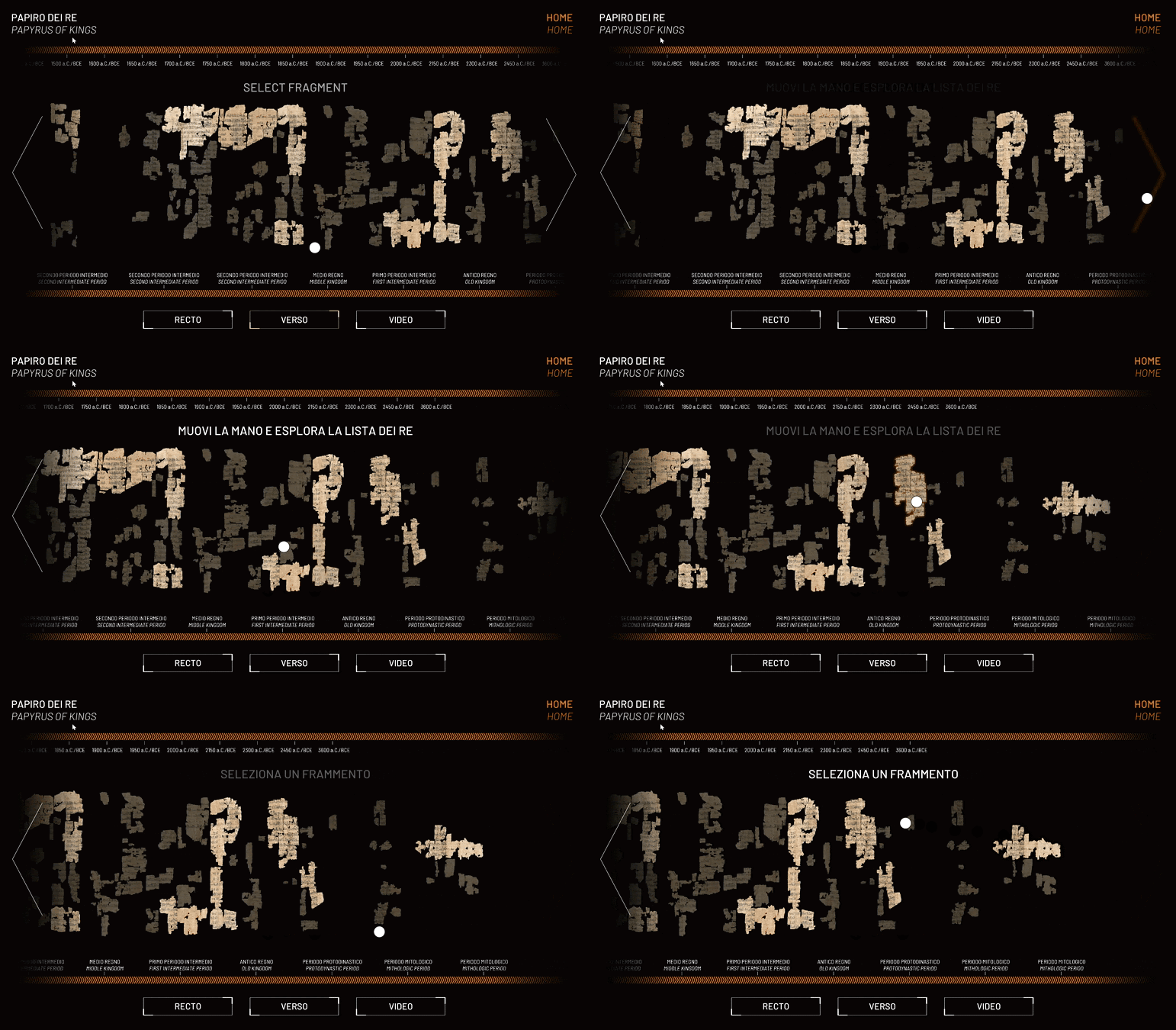
Papiro dei Re is a touchless interactive application developed with Robin Studio for the Egyptian Museum of Turin — one of the most important Egyptology collections in the world. It allows visitors to explore a precious XIII century BC papyrus, the "Book of Kings" of ancient Egypt, through the movement of their hands alone, without touching any surface.
The choice of Leap Motion as the interaction sensor was born from a post-pandemic need: eliminating physical contact in public museum contexts. But the constraint became an opportunity — the resulting experience is more intimate, more focused, and surprisingly intuitive for visitors of all ages.
The application was designed with a fully modular architecture to adapt to evolving contents and new research findings. During development, the papyrus scholarship was still actively being updated — the system had to be ready to incorporate new discoveries without rebuilding from scratch.
My role covered the full development: from conceptualising the experience and organising the content to building the application and designing the interactions. The work happened in constant dialogue with museum curators and researchers — always trying to find the balance between what the scholarship required and what the technology could actually do. The graphical elements were designed by Robin Studio.
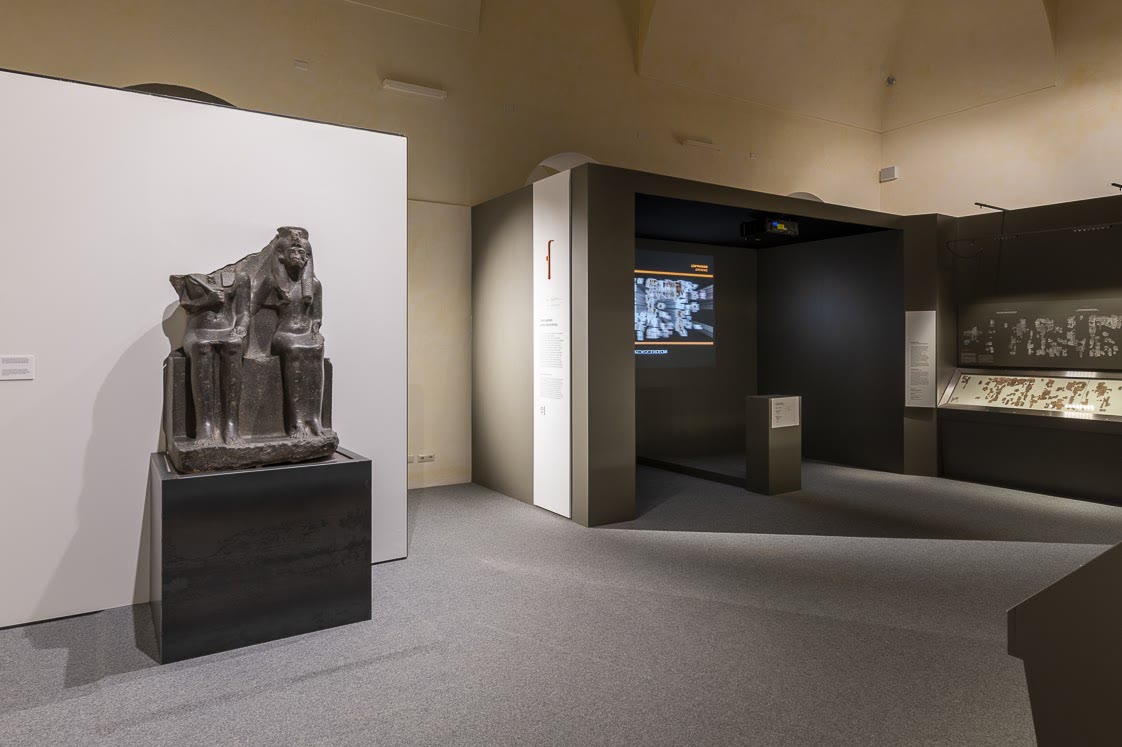
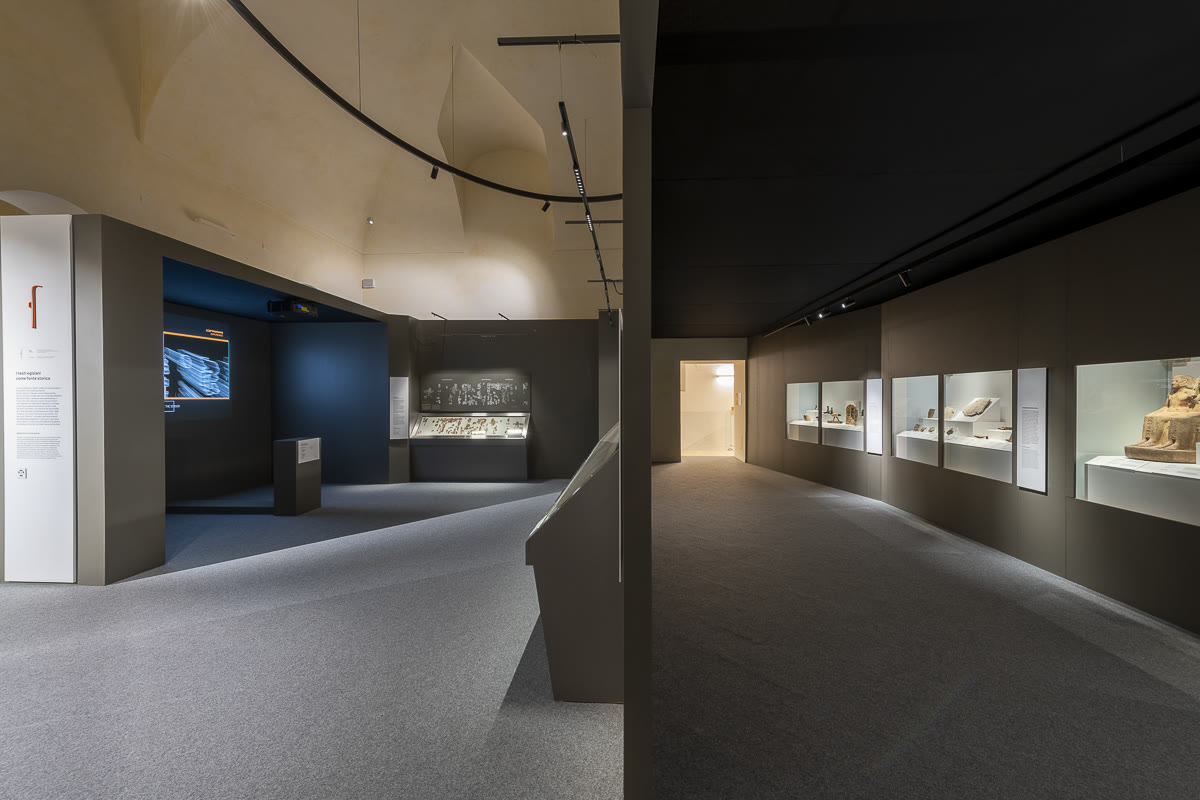
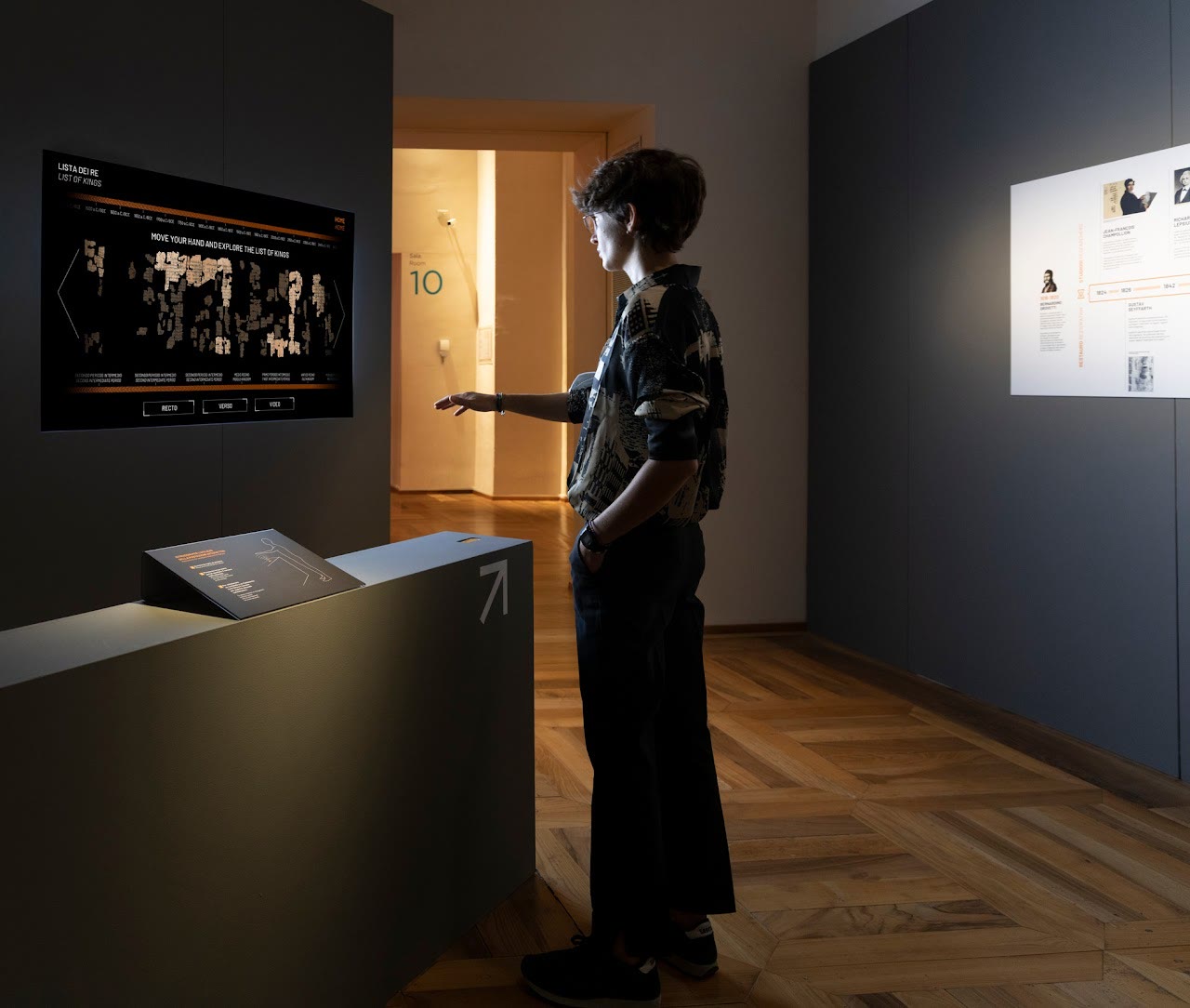
 Touchless gesture — Leap Motion
.gif) Papyrus scroll interaction
Papyrus scroll interaction
.gif) Content navigation
Content navigation
Proxymity
Are you moving the system, or is it moving you?
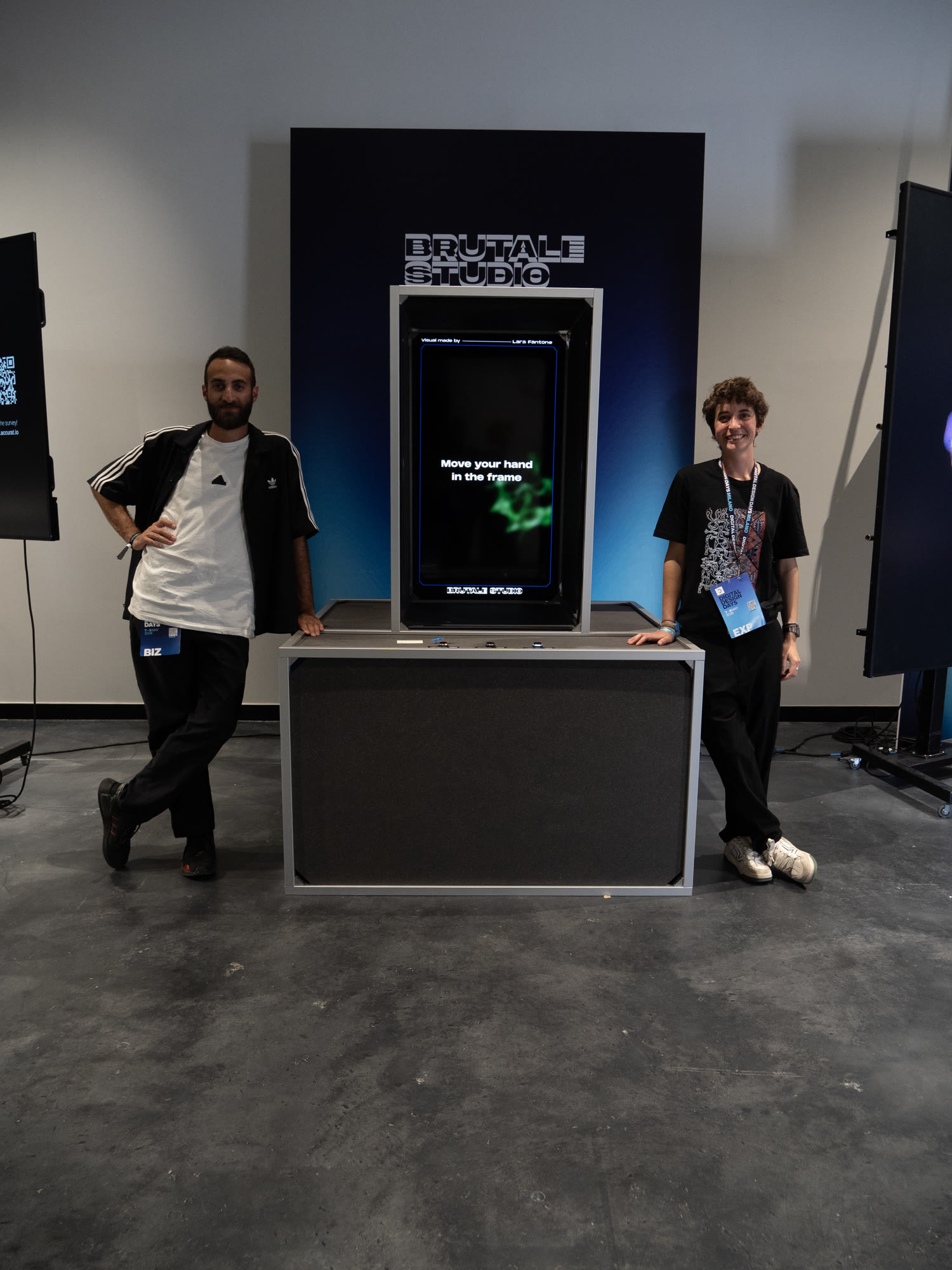
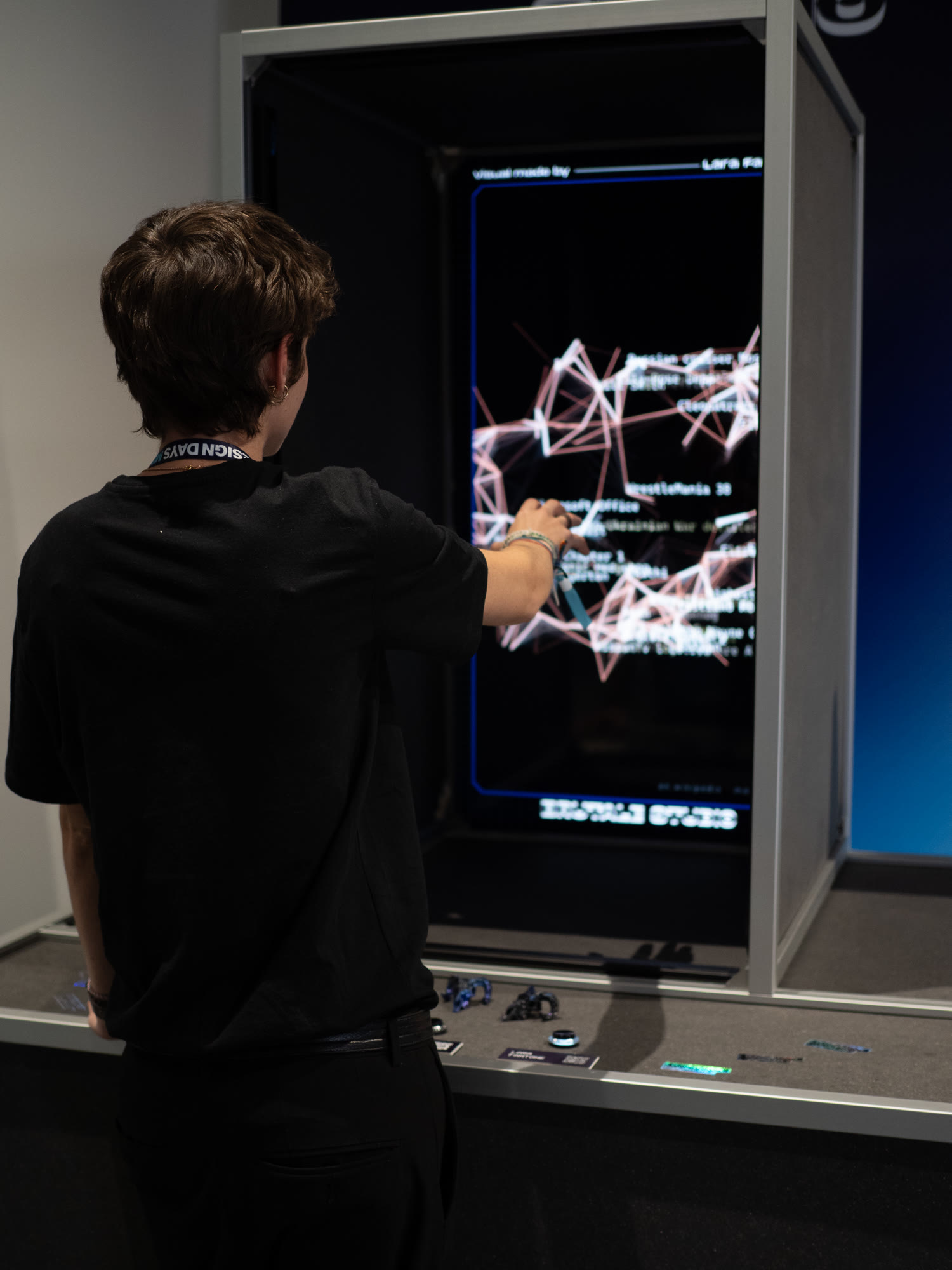
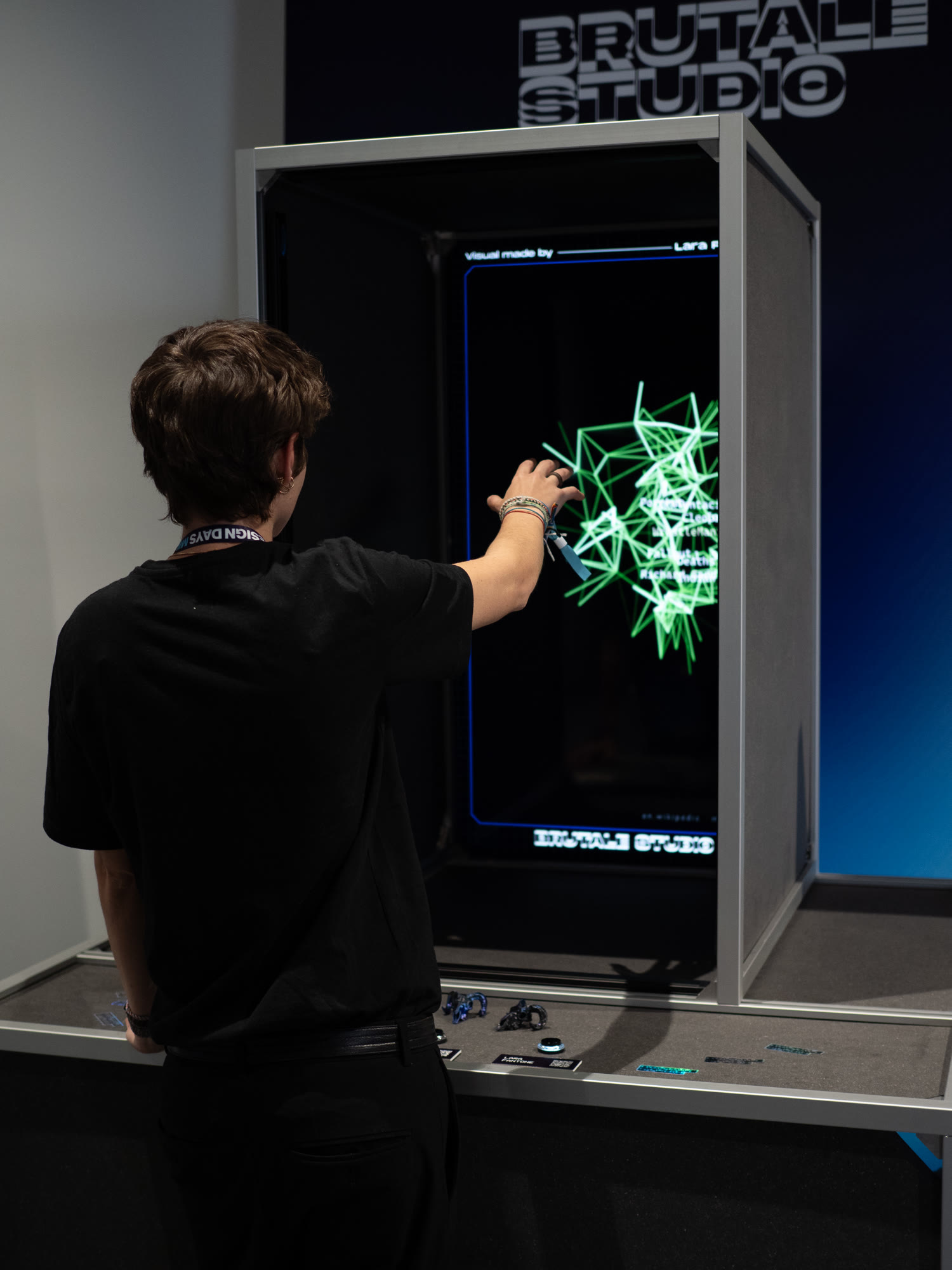
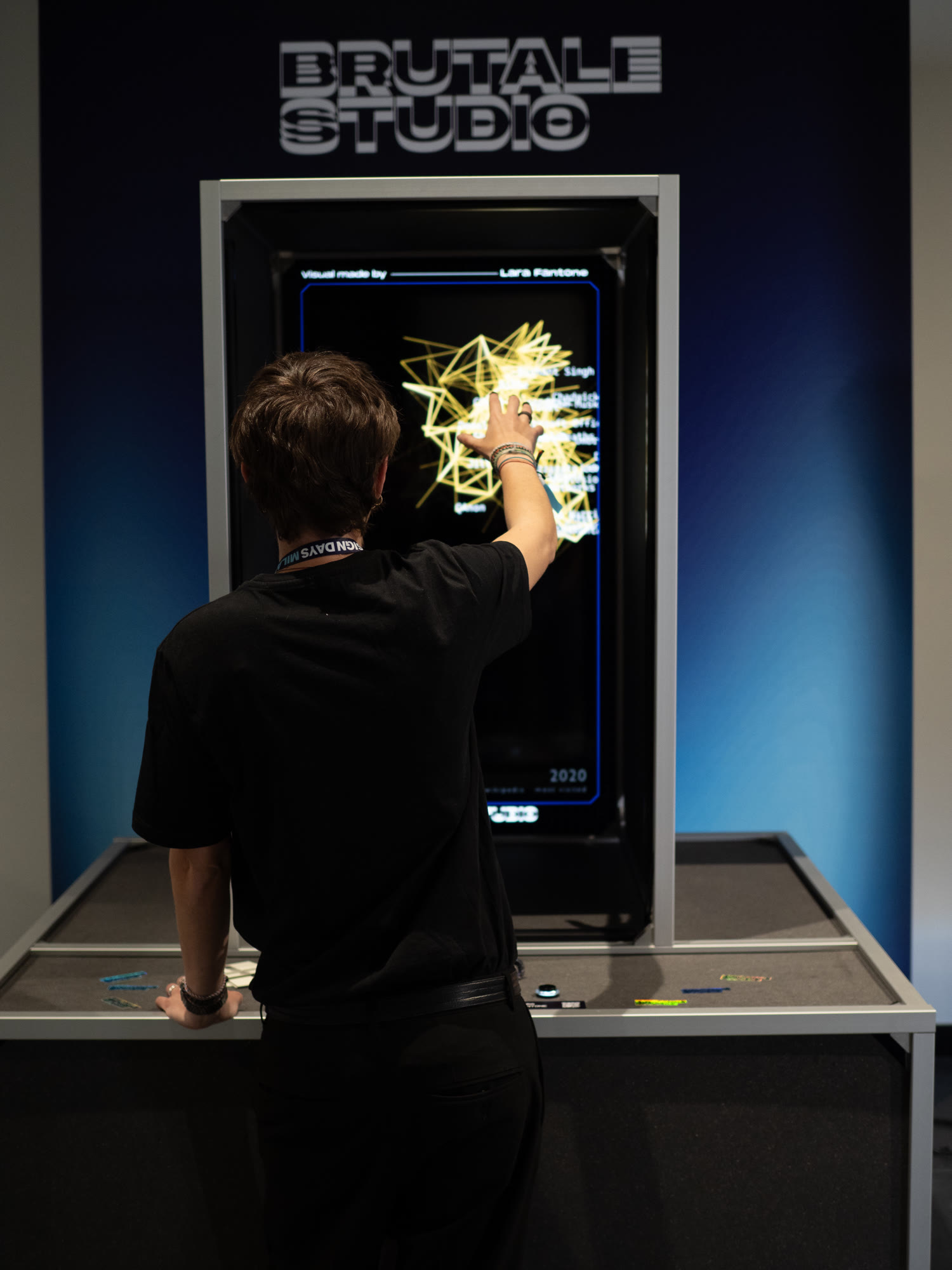
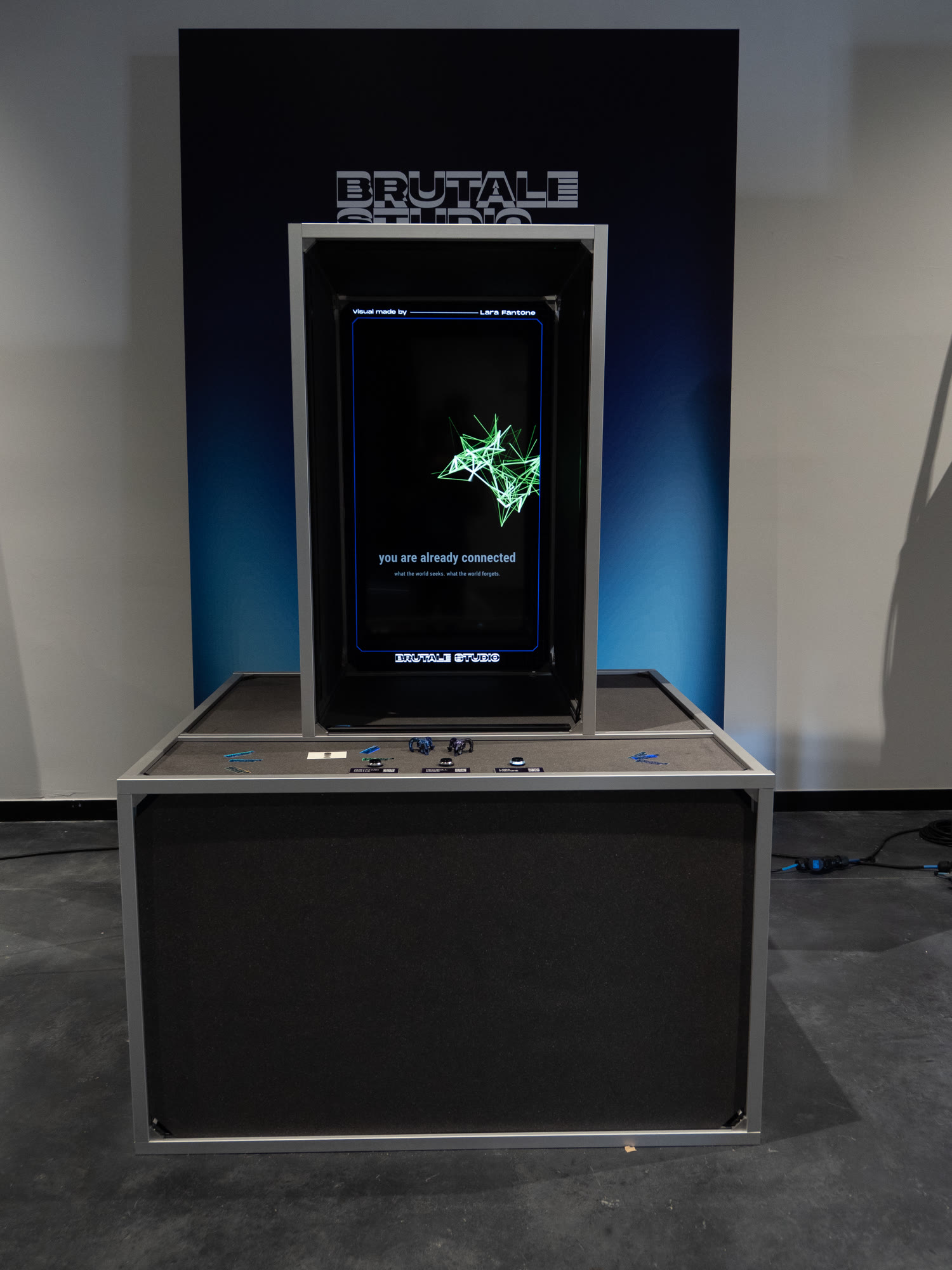
Proxymity is an installation that explores the tension between control and surrender in our relationship with collective digital noise. Visitors interact with a real-time network of words — drawn from the most visited Wikipedia pages at that exact moment — by moving their hand over a sensor.
The gesture seems to give control. Words cluster, scatter, respond. But the implicit question the installation poses is more unsettling: is the visitor shaping the system, or is the system — this massive, invisible flow of collective human attention — already shaping them?
The network also carries a temporal layer: alongside the live data, the system surfaces what people were reading two, four, or six years ago. The shift is quietly unsettling — what captured collective attention then, what has faded, what has stayed. The installation becomes a kind of memory of the internet: not just what we think about now, but how we have changed.
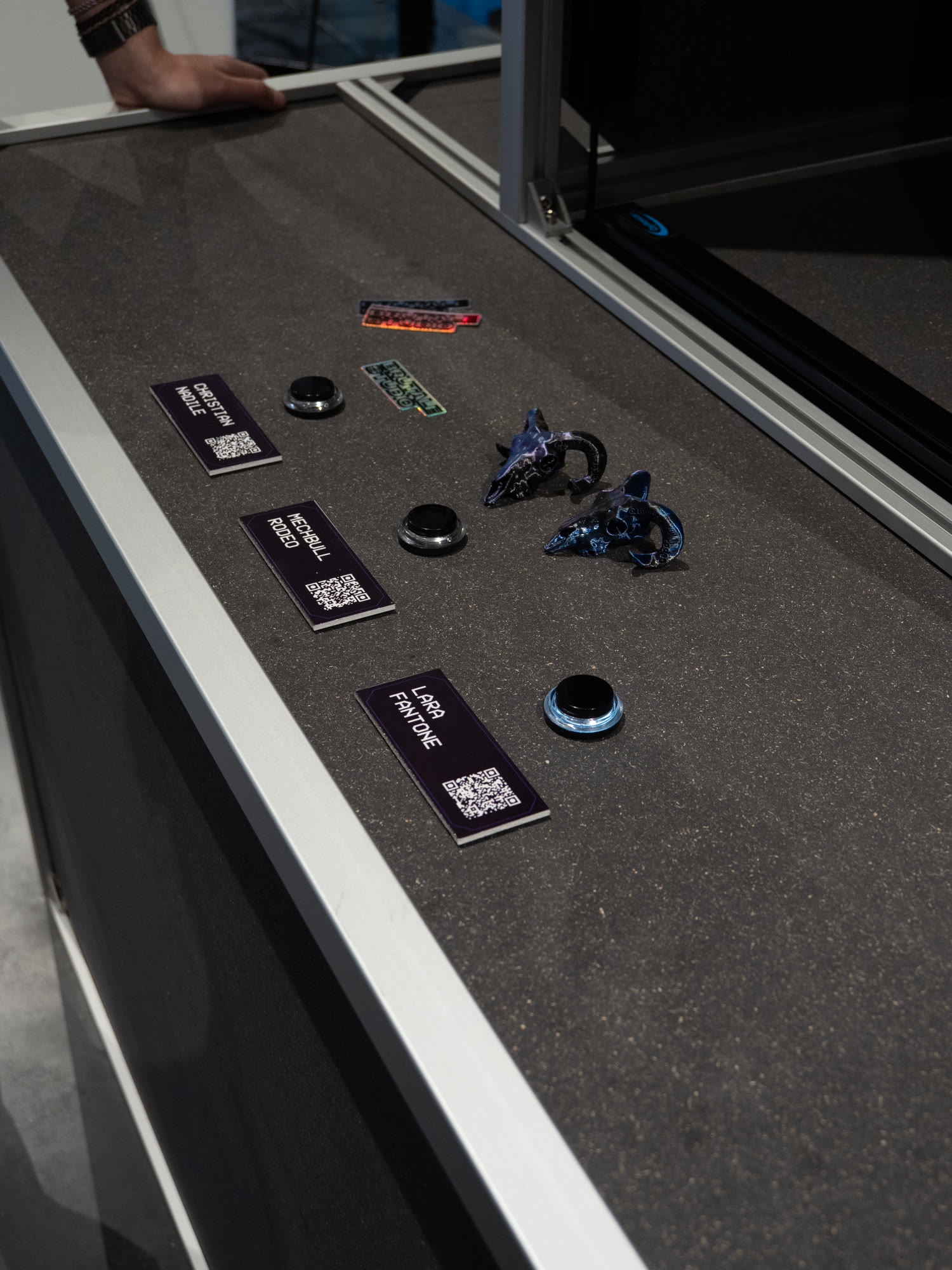
The work touches on themes of digital connection and disconnection, the weight of information, the ambiguity between agency and passivity, and collective attention as a living entity. Developed for Brutale Studio, it was shown at the DDD Festival in Milan, as part of the Invisible Light programme.
 Installation view, DDD Festival Milano
Pompei
Experience
A treasure hunt across ancient Pompeii
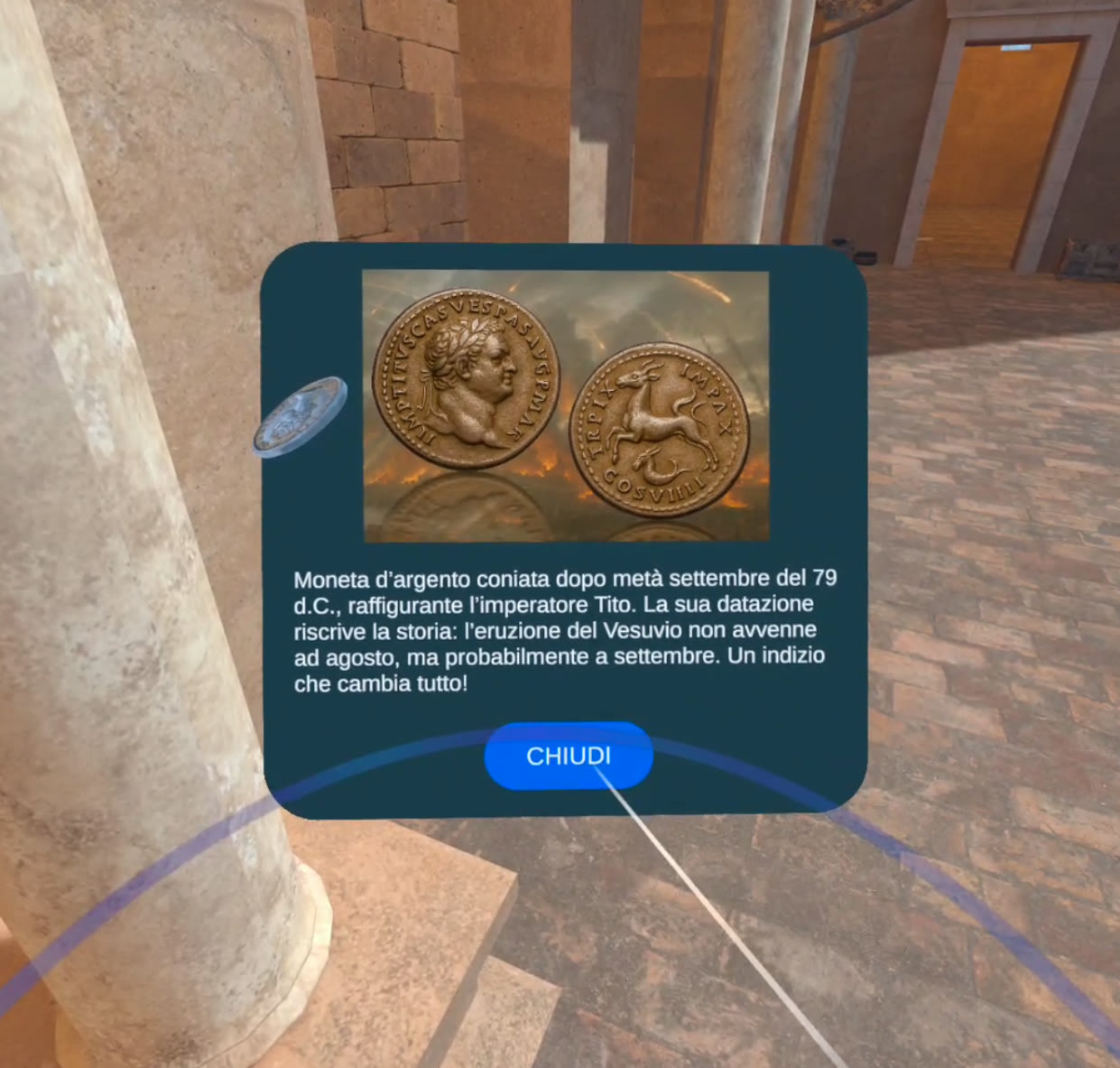
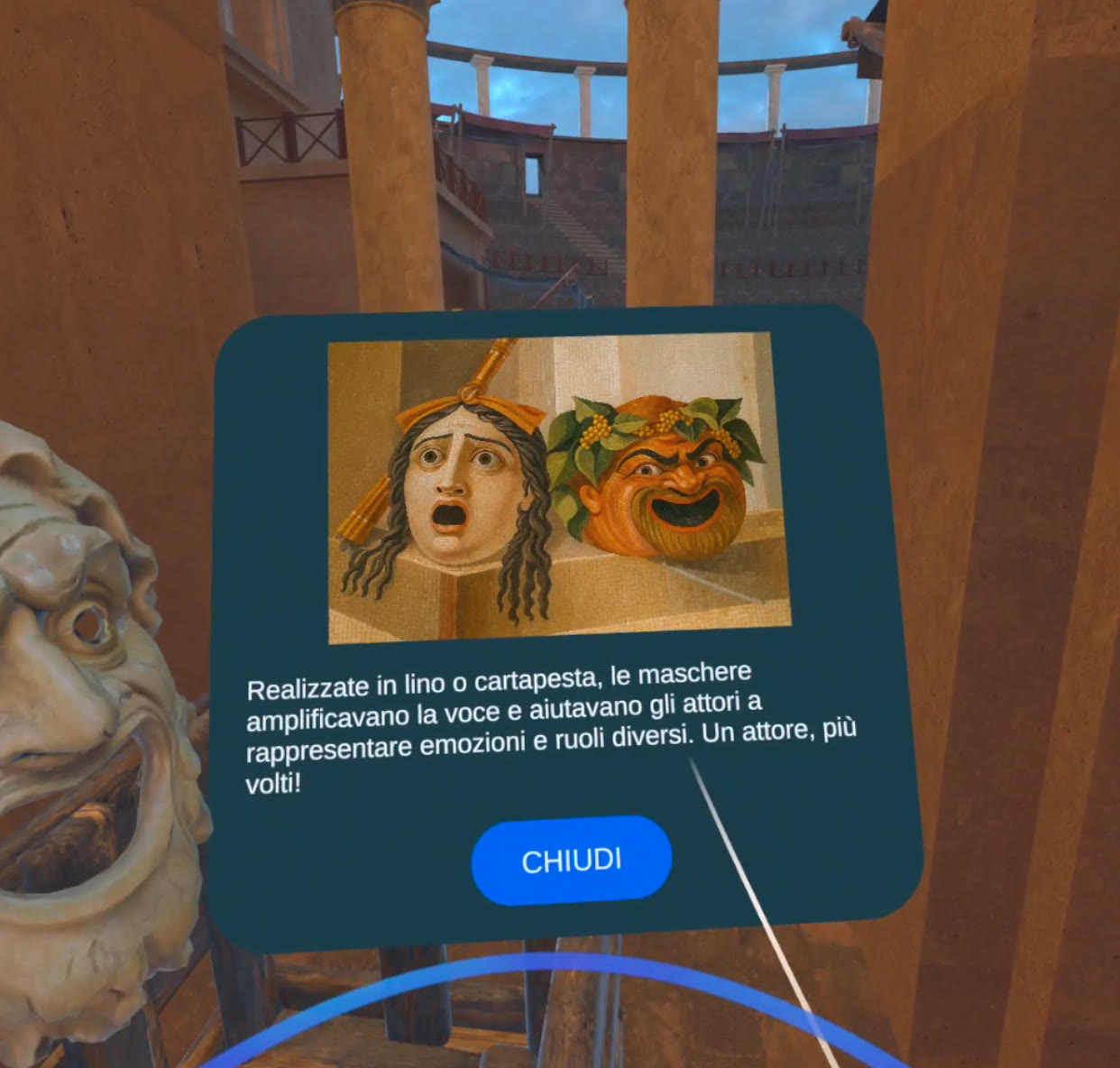
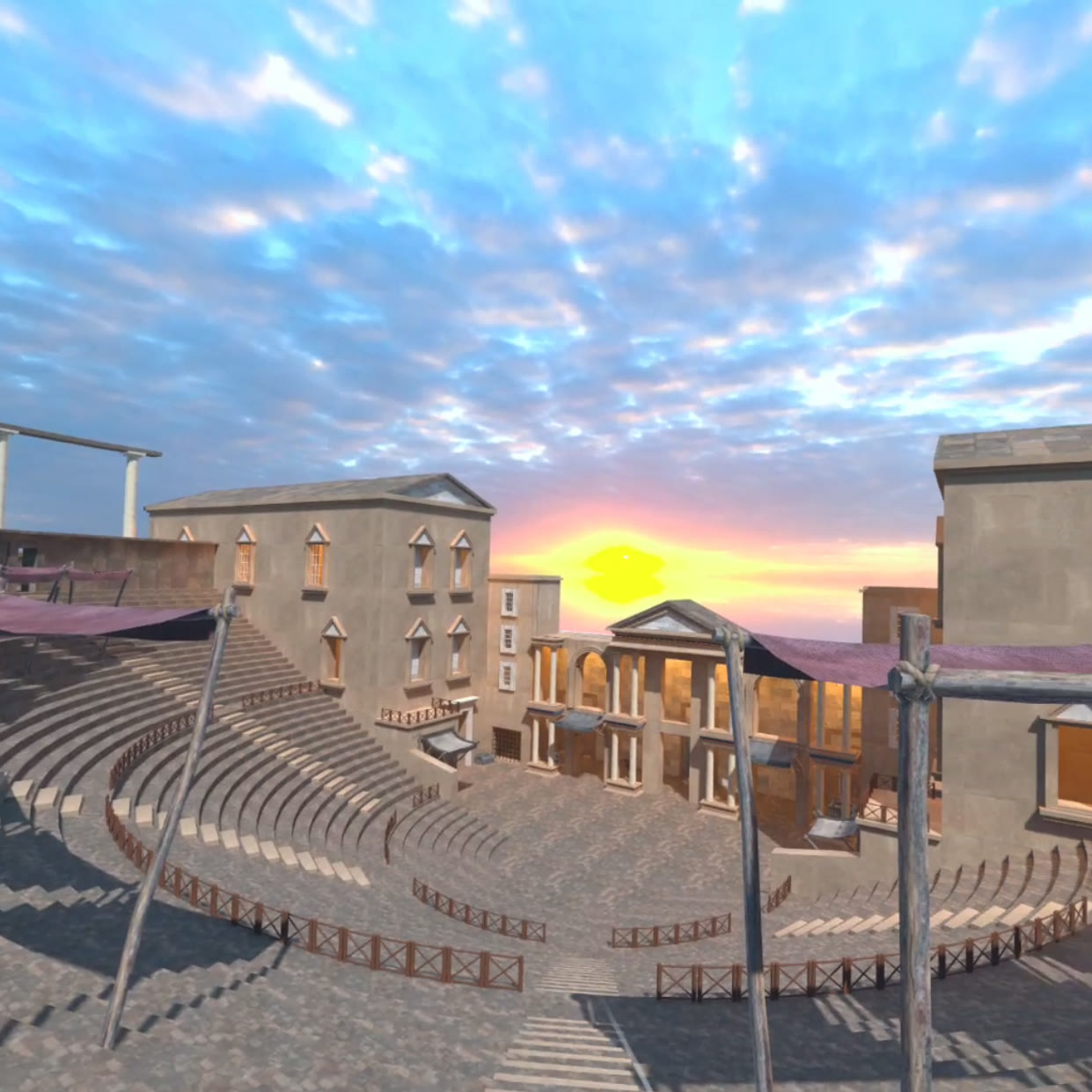
Pompei Experience is an immersive treasure hunt set inside a historically accurate digital reconstruction of ancient Pompeii. Four environments recreated with historical precision: the Theatre, a Roman Domus, the Temple of Apollo, and the Forum.
Players move through the city looking for hidden objects. Finding each one unlocks contextual historical information about the Roman world — transforming the game into an educational experience that doesn't feel like one.
At the end, a quiz collects responses into a backend database to analyse knowledge acquisition across players. This data layer makes the experience valuable not just for visitors but for educators and institutions using it as a learning tool.
The project was designed with museums, educational platforms, and cultural exhibitions in mind — a format that could travel and adapt across different contexts.
Musica
Immersiva
Paintings as portals to live music
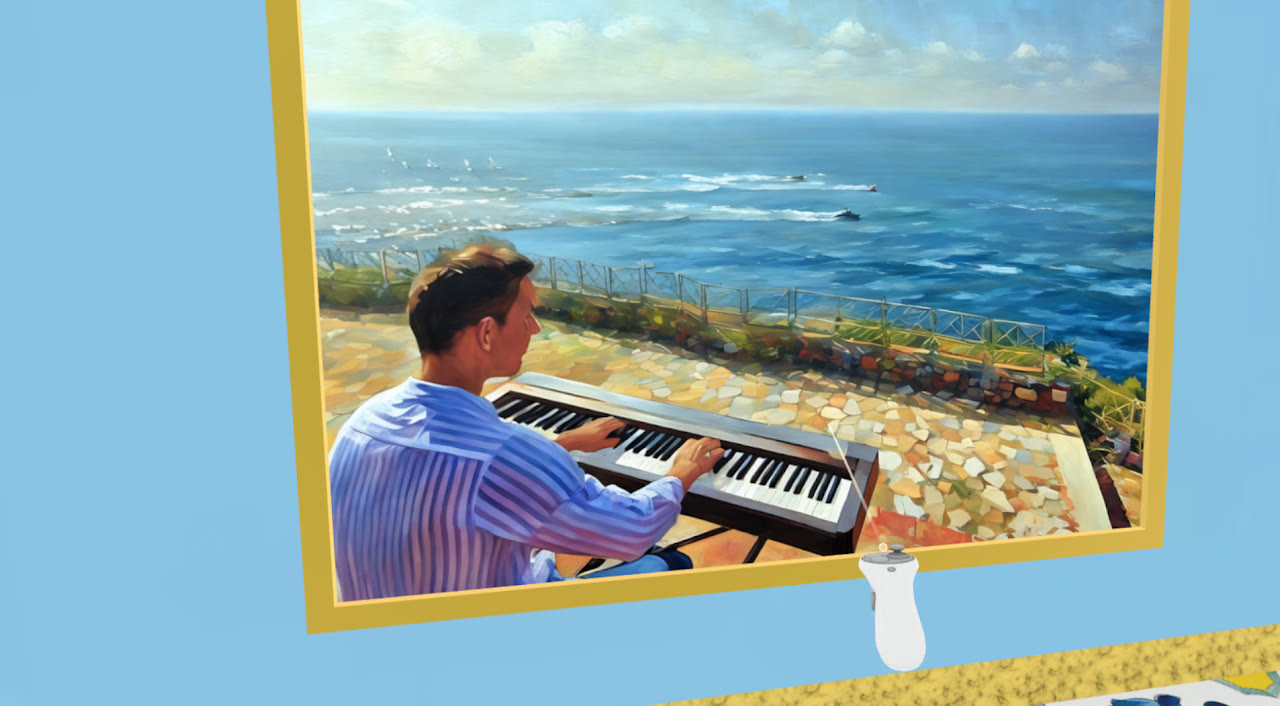
Musica Immersiva is a VR application built for Musikarma, the musical association founded by pianist Giovanni De Simone, in collaboration with the startup Cultura Immersiva.
Users enter a main gallery space where paintings function as portals: selecting a canvas teleports you to the location it depicts. The first content takes visitors to the Amalfi Coast, where De Simone's original compositions fuse with the landscape in immersive 8K 360° video.
The main technical challenge was balancing the competing demands of 8K video quality, file size, and real-time performance inside a standalone VR headset. The interaction system also had to be intuitive enough for users at any level of VR experience — from enthusiasts to total newcomers.
Neurals
Touch, and everything changes. Then resets. Almost.
Neurals simulates a neural or cosmic network. The visitor touches the surface, triggering a local break: connections fracture, reorganise, illuminate. Then, slowly, everything returns to how it was. Or almost — the system carries the trace of every touch, even when it's no longer visible.
The central concept is impermanence. The gesture matters — it produces a real, visible effect. But the system doesn't hold it. It absorbs the disturbance and closes back around it, as if the touch had never happened. Except it did. And something, invisibly, has shifted.
The entire piece was built in TouchDesigner. Interaction is captured through a LiDAR sensor — which detects the visitor's presence and position without any physical contact, translating proximity into disturbance across the network. The project was created as part of the Experience Design course by WOA Studio.
Magic
Hands
Your body as a visual instrument
Magic Hands is an interactive experience that lets users create and manipulate generative visuals in real time through hand gestures. The user becomes a visual performer: body movements trigger dynamic generative effects through motion sensors and live coding.
Built in TouchDesigner with hand tracking via MediaPipe, the project explores the relationship between physical gesture and generative art. The goal was an intuitive, playful way to express creativity — lowering the barrier between body and digital image to zero.
The work was developed as part of the TouchDesigner course during my Master's programme, combining technical exploration with experiential design thinking.
Linea
pelle
Five years of material research, rendered in 3D
A commissioned 3D visual project for Spazio Linea Pelle, created for the DHouse Laboratorio Urbano exhibition marking the company's five years of material research.
The visuals explore the material vocabulary of Linea Pelle — cotton, synthetic textiles, and leather — rendered in Blender with attention to the physical properties of each material: how light moves across woven surfaces, how leather catches and holds shadow, how synthetics reflect differently.
The result is a set of 3D visuals that function both as documentation and celebration of five years of material exploration — a visual language that matches the tactile richness of the materials themselves.
 Knit — material study
 Wool — material study
 Synthetic — material study
 Knit — detail
 Wool — detail
We Are
Generative visuals, live space, one performance
We Are is a generative videomapping project performed at DHouse Academy in Milan. 3D visuals created in Blender are projected and mixed live through Resolume Arena, responding to the music and energy of the space in real time.
A separate research layer explores AI-generated mask effects created in TouchDesigner using StreamDiffusion — a diffusion pipeline that processes video input and transforms it into generative imagery, applied to human figures and abstract forms. These were developed and composited in advance, then integrated into the live set.
The project brought together 3D animation, spatial projection, and AI image generation into a single live performance practice — exploring what it means to perform with generative imagery as your instrument. Developed as part of the Master in Creative Visual & Digital Art.
 Breaking AR
 Reveal
 Live
Mask reveal
Live
Mask reveal
 Mask — real-time AI diffusion
 Humanized mask
John
Cavendish
English classicism, Italian craftsmanship — on the web
John Cavendish is a showcase website for a British luxury brand of wool and cashmere fabrics — a modern interpretation of English classicism with Italian inspiration. I developed the front-end of the site, translating the visual design into a clean, responsive, performant experience.
The project started from Figma designs by Nicoletta Annibali. My role was to bring those designs to life in code — building the layouts, the responsive behaviour, the image galleries and scroll interactions, while staying faithful to the refined, editorial feel the brand required.
A luxury fabric brand demands restraint and precision: generous whitespace, careful typography, imagery that breathes. The build had to honour that — every spacing decision and transition tuned to feel as considered as the materials the site presents.